Choosing the right tennis balls can dramatically affect a beginner’s learning curve. The following picks are tailored for new players, emphasizing slower speeds, lower compression, and durable construction to help beginners develop reliable strokes, control, and confidence on the court. Each option below includes a quick rundown of why it suits beginners and what to expect during practice.
| Product | Brand | Key Benefit for Beginners |
|---|---|---|
| WILSON Sporting Goods Youth Tennis Balls – US Open Orange, Single Can (3 Balls) | WILSON | Low compression for ages 9-10; 50% slower than standard balls |
| WILSON Championship Tennis Balls – Extra Duty | WILSON | Extra duty durability; suitable for longer rallies on hard courts |
| GAMMA Quick Kids 36 Training Tennis Balls | GAMMA | 75% slower speed; high visibility; great for fundamentals |
| INSUM Bulk Tennis Balls for Beginner – 12 Pack | INSUM | Durable, high elasticity; value pack with mesh bag |
| WILSON Sporting Goods Starter Foam Tennis Ball | WILSON | Oversized foam design; very low bounce for tiny courts and beginners |
Each choice focuses on player development rather than speed or power. In the sections that follow, you’ll find concise product rundowns, practical observations, and usage suggestions to help you pick the right ball for practice, coaching drills, or casual play.
WILSON Youth Tennis Balls – US Open Orange

Designed for younger players, this set uses low compression to slow ball speed, making rallies more approachable for beginners. The orange color provides high visibility, supporting better tracking and consistent contact. It’s ideal for 9- to 10-year-olds who are transitioning from larger nets and shorter court drills to standard-size play. The balls are pitched as stage 2 orange starter tennis, delivering a 50% reduction in speed compared with regular balls. Coaches often recommend these for early-match play and basic stroke repetition to build confidence and consistency.
WILSON Championship Extra Duty Tennis Balls

These balls are USTA and ITF approved, reflecting standard competition construction with durability designed for longer rallies on hard courts. While they aren’t low-compression balls, their steady bounce and reliable distance help beginners practice consistent mechanics over extended drills. They are well-suited for school or club practice sessions where players begin building topspin, depth control, and shot selection under realistic play conditions.
Magicorange 12 Pack Training Tennis Balls

This bulk option targets beginners and those engaged in regular practice. The set includes 12 balls with a mesh bag for easy transport and storage. The durable rubber and felt design aims for a consistent feel with reduced shock, helping players maintain rallies and focus on technique rather than ball speed. The pink color makes it easy to identify on the court, which can be helpful for younger players or group drills.
INSUM Bulk Tennis Balls for Beginner – 12 Pack (Yellow)

These high-elasticity balls are designed for all-court practice and dog-training sessions alike, offering durable rubber and felt for a reliable bounce. The 12-pack format makes it ideal for practice drills, partner work, and repeated rallying. Beginners can benefit from the steady performance while focusing on grip, footwork, and consistent contact with the ball. The included mesh bag supports simple organization and transport between home, car, and court.
INSUM Bulk Tennis Balls for Beginner – Light Blue

Similar to the yellow version, these light-blue balls emphasize durability and reliable bounce. The 12-ball pack with a reusable mesh bag makes regular practice economical and convenient. They’re well-suited for beginners who are learning basic rally skills, forehand and backhand technique, and court positioning. The durability helps reduce interruptions caused by frequent ball replacements during practice blocks.
MRYCZ FYRHD 12 Pack – 50% Low Compression
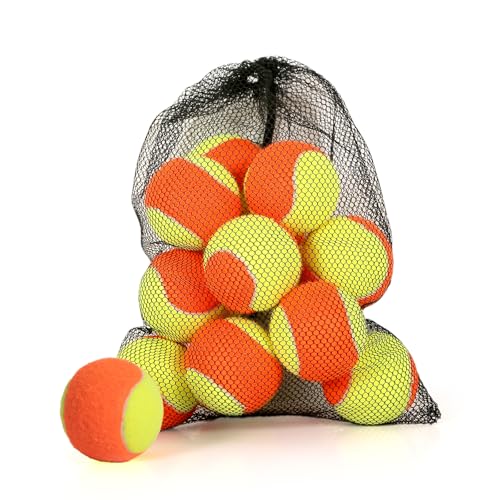
This set is designed specifically for beginners with stage-specific low compression to ease beginners into rallying. The standard 2.58-inch diameter and a bounce height up to 3.28 feet support progressive skill development while keeping sessions engaging. A mesh bag adds portability and organized storage, which is useful for families and coaches managing multiple players or practice sessions.
Buying Guide: Key Purchase Considerations
When selecting tennis balls for beginners, consider the following factors to match practice goals with ball performance:
- Compression level: Lower compression slows ball speed, helping learners develop consistent contact and longer rallies without frustration.
- Bounce characteristics: A predictable bounce supports technique development. Beginners benefit from balls that bounce moderately and stay on the court rather than sailing long.
- Durability: Practice can be intense for new players. Durable cores and felt reduce replacement frequency and keep costs reasonable over time.
- Court compatibility: For younger players and beginners on smaller courts or driveways, foam or low-compression balls are often better suited than standard pressurized balls.
- Ball visibility: Bright colors (orange, pink, yellow, or two-toned surfaces) improve tracking, which aids in timing and coordination during drills and rallies.
- Storage and transport: Mesh bags and bulk packages simplify organization, allowing quick setup for lessons, clinics, or backyard practice.
How to Choose By Practice Scenario
For at-home practice with kids, foam or ultra-low compression balls are ideal to reduce frustration and build confidence. In coach-led sessions or clubs, a mixture of low-compression practice balls and standard balls can simulate match conditions while keeping beginners engaged. For long outdoor sessions on hard courts, consider durable options that withstand more rallies without frequent replacements.
Usage Tips For Beginners
Maintain consistent contact by focusing on a short, controlled swing. Start close to the net line for easy rallies and gradually move farther back as control improves. Encourage players to call out the ball’s flight path and aim for clean, flat hits before introducing topspin and slice. Rotate through different ball types in practice blocks to compare feel and assess which ball supports ongoing improvement.