Finding the right sleep setup for camping depends on your season, terrain, and how you carry gear. This guide highlights five top sleeping systems and pads designed for American hikers and campers, balancing weight, warmth, and ease of use. Each option focuses on practical sleep quality, from ultralight inflatable pads to modular sleeping bag systems with bivy covers. Read on to compare features, setup times, and overall performance to choose a system that keeps you rested for the next outdoor adventure.
| Product | Key Benefit | Weight/Packability | Season/Temperature Range |
|---|---|---|---|
| FUN PAC Camping Sleeping Pad | Ultralight, built-in pillow, quick inflation | Very compact | All-season comfort with 3″ thickness |
| MT Modular Sleep System (4-Piece) | Military-grade modular design, vacuum compression | Heavy-duty but compact with sack | All-season (extensive temperature ranges) |
| ATEPA Down Sleeping Bag | Three-season warmth, versatile with pad attachment | Moderate weight with compression sack | 50°F comfort, 45°F limit |
| MT Army Modular Sleeping Bags System | Multi-layered with bivy for all-weather use | Heavy but durable | Comfortable -15 to 0°C ranges |
| USGI Gear Military Sleeping Bag System | 4-piece system for extreme conditions | Rugged and reliable | 50°F to -50°F range coverage |
Note: The products above emphasize different sleep strategies—from compact pads with integrated pillows to full modular systems that pair with bivies for harsh conditions. Consider how you hike (weight vs. warmth), how you’ll bivy, and how weather affects your sleep environment when selecting a sleep system.
FUN PAC Camping Sleeping Pad With Pillow

The FUN PAC sleeping pad combines an ultralight self-inflating design with a built-in pillow for integrated comfort. Its egg-shaped air cells and 3-inch thickness help mitigate ground irregularities and back or neck pressure. The pad inflates in about 30–60 seconds using the built-in pump and deflates in one second, reducing setup time. Weighing in at a compact size, it’s designed for hikers who prioritize weight and packability without sacrificing warmth and support. Ideal for backpacking, camping, and travel where a simple, reliable sleep surface matters.
Key features include: extra width (up to 78×27 inches when inflated), built-in pillow, and a two-layer valve to minimize leaks. The pad is designed for easy carry in a backpack, making it a practical all-around option for spring, summer, and shoulder-season trips where weight savings are a priority.
MT Army Modular Sleeping Bags System

This MT system offers a modular approach with a bivy cover, multiple sleeping bag layers, and a heavy-duty interior. The outer fabric uses water-repellent, tear-resistant nylon with heat-treated seams for moisture resistance. The design supports a wide temperature range, with comfortable operation around 5–15°C and extreme operating capabilities down to -1°C. The system is designed for high durability in rugged outdoor environments, including field use and cold-weather camping. It pairs well with a compatible pad and bivy in cold seasons, offering robust warmth and protection.
MT Army Modular Sleeping Bags System With Bivy

This MT system expands on the modular concept with an integrated bivy cover and a multi-layer, temperature-tunable configuration. The outer shell uses rugged nylon ripstop with a weather-ready DWR coating, designed for reliable performance in damp or windy conditions. The configuration allows flexible entry, top-layer access, and forward-compatibility with additional accessories. It is built for stability and warmth across a broad range of environments, from mild to frigid camping scenarios.
USGI Gear Military Sleeping Bag System
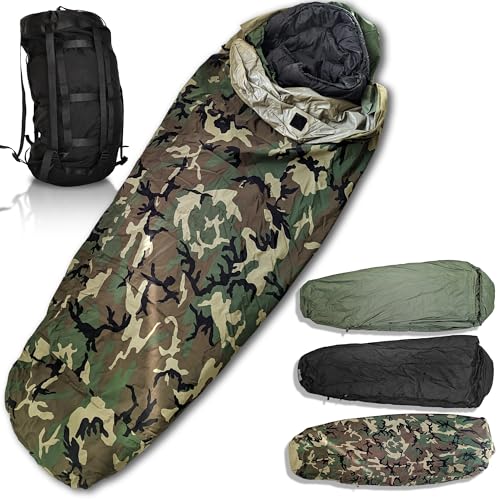
This four-piece modular system provides versatile all-weather protection from 50°F down to -50°F. Constructed with 210T nylon ripstop and a DWR coating, the set emphasizes tear resistance and water repellency. The bivy cover adds wind and moisture defense, while the three separate sleeping bags feature insulation that maintains warmth even when damp. The combination supports rapid adaptation to changing conditions and extreme environments, making it a strong choice for expedition use, cold-weather camping, and survival scenarios where reliability matters.
MT Modular Sleep System – 4-Piece Tactical Set
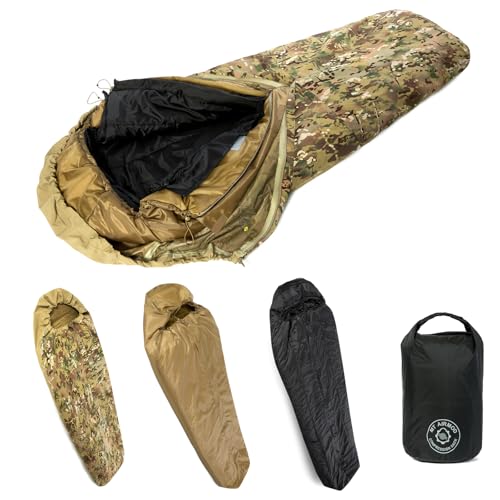
MT’s tactical 4-piece modular system includes a Patrol Bag, an Intermediate Cold Weather Bag, a waterproof bivy, and a Vacuum Compression Sack. The front-zip design enhances access and ventilation, while the vacuum sack reduces space usage by removing air and compressing contents. This setup is designed for expeditions and field use, where packing efficiency and warmth are critical. It supports a range of climates and can be paired with appropriate pads and a bivy for winter expeditions or arid high-desert nights.
ATEPA Down Sleeping Bag For Adults

The ATEPA down sleeping bag features 300g ColdMaster down and recycled 20D nylon for warmth and durability. With a comfort rating of 50°F and a limit of 45°F, the bag offers three-season usability. The wrap-around design and reinforced corners help distribute pressure evenly, and the sheet can be tied to an air pad for added stability. The product supports versatile configurations, including transforming into a sleeping blanket, and is built to resist moisture and wind while keeping weight manageable for backpackers.
Buying Guide: Key Purchase Considerations And Comparisons
Use this guide to compare sleep-system options across common camping scenarios.
- Temperature and climate: Choose a system that matches the coldest temperature you expect. Modular systems with bivies and separate bags can extend usability into harsher conditions, while ultralight pads are best for mild seasons.
- Weight and packability: For long hikes, every ounce matters. Ultralight pads save weight but may sacrifice warmth. Modular sets with compression sacks optimize packing efficiency for expeditions.
- Comfort vs. weight: A thicker sleeping pad or an integrated pillow improves comfort but increases weight. Balance personal comfort with back- and knee-friendliness for long nights.
- Durability and materials: Look for ripstop nylon, DWR coatings, and sturdy zippers if you camp in damp or rugged environments. A bivy cover adds extra weather protection for exposed sites.
- System compatibility: If you already own a backpacking mat, consider adding a compatible sleeping bag or bivy to extend its performance. Conversely, a full modular system simplifies setup in variable conditions.
- Setup time and maintenance: Self-inflating pads with quick valves save time. Vacuum compression sacks reduce volume but require care to avoid leaks. Consider repair kits or lifetime warranties for reliability in remote areas.
In summary, the best sleep system depends on your trip length, season, and carrying capacity. For lighter backpacking, a compact pad with a detachable pillow might be ideal. For expeditions or high-wind/cold environments, a modular system with a bivy offers greater protection. Always verify compatibility between pads, bags, and bivies to ensure you stay warm, dry, and rested on every adventure.