Choosing a reliable recurve bow for deer hunting involves balancing draw weight, hand orientation, stability, and build quality. The following selections are popular among hunters and hobbyists for deer-related archery, offering varied draw weights and right- or left-handed options. This guide highlights five well-regarded models with practical features for field use and practice.
| Product | Brand | Draw Weight | Handedness |
|---|---|---|---|
| Sanlida Eagle X9 New 58” | Sanlida | 40 lbs | Right |
| Deerseeker Archery 62″ 45 lb | Deerseeker Outdoor | 45 lbs | Right |
| Samick Sage Archery 62” | Samick Sage | 40 lbs | Right |
| GLURAK Black Hunter 60” | GLURAK | 45 lbs | Right |
| Deerseeker Outdoor 60” 50 lb | Deerseeker Outdoor | 50 lbs | Right |
Each model brings distinct strengths, from ready-to-go starter kits to higher draw weights suitable for seasoned hunters. Read on for a detailed look at five options and a buying guide to help you compare features like limb construction, take-down design, and grip ergonomics.
Sanlida Eagle X9 New 58” Recurve Bow

The Sanlida Eagle X9 is a complete hunting recurve kit designed for adults and hunters. It features a 58-inch bow with a 40-pound draw weight and a right-hand configuration. The kit emphasizes a matched set of accessories to improve accuracy and ease of use in hunting contexts. This model is positioned as a standard intermediate hunting recurve bow kit, suitable for both outdoor practice and game hunting with the appropriate draw weight.
Deerseeker Archery 62″ Takedown Recurve Bow Set (45 lb)
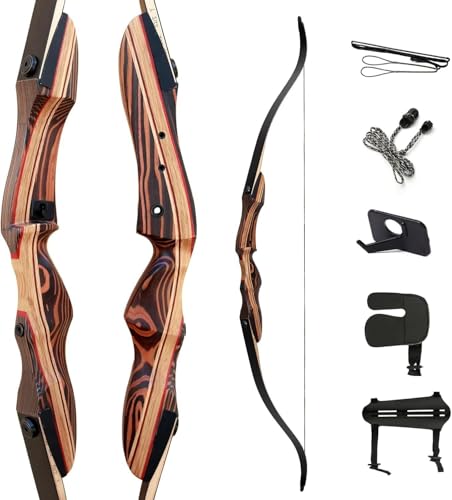
This 62-inch takedown recurve bow features a 45-pound draw weight and a versatile riser suitable for both right- and left-handed users. The laminated limbs combine fiberglass and maple wood to provide faster performance with reduced vibration. The riser uses hard Dymond wood for durability, and the bow is designed for deer hunting, targets practice, and general archery use. The set is crafted for reliable quality and a durable hunting platform.
Samick Sage Archery Takedown Recurve Bow 62” (40 lb)

The Samick Sage offers a 62-inch frame with adjustable draw weights up to 60 pounds across a range of settings. The set includes an assembly manual, a stick-on arrow rest, two fiberglass-laminated limbs, and a 14-strand Dacron bowstring. It emphasizes interchangeability of limbs and straightforward assembly, making it a popular choice for beginners and experienced archers alike who hunt or target shoot.
GLURAK Black Hunter 60” Recurve Bow

The Black Hunter by GLURAK is a 60-inch wooden takedown recurve bow designed for target practice and hunting. It includes an ergonomic wooden grip and limbs made from durable fiberglass and bamboo laminates. The draw weights range from 25 to 50 pounds, allowing hunters to adjust for skill level or game type. Its takedown design facilitates transport and limb upgrades as needed, supporting long-term use.
Deerseeker Outdoor 60” Recurve Bow Set (50 lb)

This 60-inch takedown recurve bow from Deerseeker Outdoor targets deer hunting and general practice with a 50-pound draw weight. The limbs are laminated with maple wood and fiberglass to deliver speed with low vibration, while the high-density Dymond wood riser provides durability and stability. The bow supports right- and left-handed use and includes a flexible assembly process for field adjustments.
Buying Guide: Key Purchase Considerations
When selecting a recurve bow for deer hunting, consider these factors to ensure an appropriate match for your needs and environment:
- Draw Weight and Range: Deer hunting typically benefits from draw weights in the mid-range (40–60 pounds). Beginners may start lower, with gradual progression to higher weights as technique and strength improve.
- Riser and Limb Construction: Laminated limbs with fiberglass or maple provide a balance of speed and stability. A sturdy riser (often wood like Dymond wood) improves control in field conditions.
- Take-Down vs One-Piece: Take-down designs offer portability and easier upkeep, especially for hunters who travel. One-piece bows can be rugged but are harder to transport.
- Grip Ergonomics: A comfortable, well-balanced grip reduces fatigue during long hunts and improves shot consistency.
- Handedness: Right- or left-handed configurations align with your dominant hand. Ensure the bow’s design matches your shooting style for clean, accurate draws.
- Kit Inclusions: Some sets include sights, arrow rests, strings, and a bowstring, which can save setup time for beginners. Others are barebones and require additional accessories.
- Durability and Warranty: Look for bows with durable materials and reputable brands. A warranty can be valuable for field use and repairs.
- Maintenance and Upgrades: Consider models with easily replaceable limbs or upgrade paths to adapt to increasing skill or different hunting conditions.
In practice, choosing between a 40–50 pound bow for beginners or a 45–60 pound option for experienced hunters depends on your strength, technique, and typical hunting scenarios. Take-down designs generally offer portability for backcountry hunts, while sturdier risers can absorb more vibration during shot execution in dense environments.