Choosing a reliable one-man kayak means balancing portability, durability, and ease of use. Whether you prefer a compact inflatable for quick trips or a stable sit-on-top for shore-to-water comfort, these picks cover a range of paddling styles. Each option below is designed for solo use, with simple setup, secure storage, and solid performance on lakes and calm rivers. Read on to compare features, expected handling, and practical details to help your next adventure.
| Product | Brand | Type | Approx. Weight Capacity | Notes |
|---|---|---|---|---|
| INTEX Challenger K1 | Intex | Inflatable Kayak | 220 lb | Low-profile design; removable adjustable seat |
| INTEX Excursion Pro K1 | Intex | Inflatable Kayak | 220 lb | SuperTough PVC; removable skegs |
| Sevylor QuickPak K1 | Sevylor | Inflatable Kayak | Varies | Backpack storage; 5-minute setup |
| Pelican Maxim 100X | Pelican | Sit-in Kayak | 275 lb | Shallow V-chine hull; fiber storage |
| Pelican Sentinel 80X | Pelican | Sit-On-Top | 225 lb | Lightweight; stable multi-chine hull |
INTEX Challenger K1 Inflatable Kayak
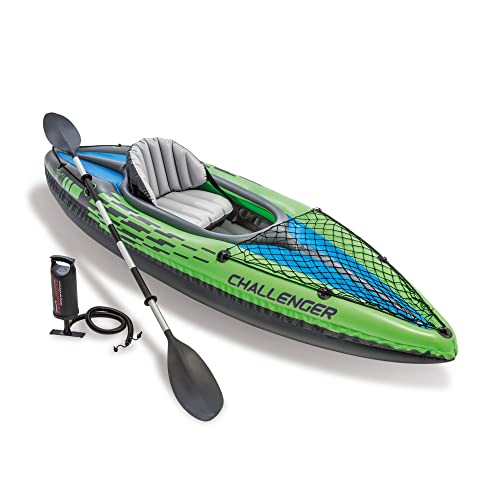
The Challenger K1 is a compact inflatable designed for solo use with a 220 lb weight capacity. It features a low-profile hull ideal for easy paddling on lakes and mild rivers, and a cockpit with removable and adjustable seating for comfort and leg room. The fabric uses a durable PVC formulation to resist damage from bumps or abrasions during solo outings. A removable skeg enhances tracking, helping paddlers maintain straight-line movement without extra effort. This setup suits casual day trips where quick inflation and deflation matter most.
INTEX Excursion Pro K1 Inflatable Kayak

The Excursion Pro K1 emphasizes durability with a three-ply laminate and SuperStrong PVC to withstand abrasion and sunlight. It inflates to provide extra rigidity and stability, improving handling for solo paddlers. It includes two removable skegs for adaptability across water depths, and its storage space in the bow and stern helps keep essential gear within reach. Stainless steel D-rings support dry bags and gear, making longer day trips more practical. This model is well-suited for experienced paddlers seeking performance and resilience.
Sevylor QuickPak K1 1-Person Kayak
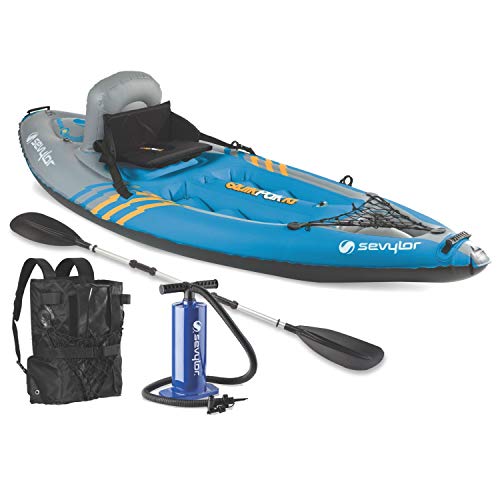
The Sevylor QuickPak K1 provides a unique backpack-style carry system that converts to a seat in minutes, ideal for solo travelers who value portability. Constructed with 21-gauge PVC, it balances ruggedness with a lighter frame for lakes and calm rivers. A five-minute setup time makes it a convenient option for spontaneous outings. While not as feature-rich as premium inflatable kits, it delivers reliable performance for casual paddling with simple inflation and deflation.
Pelican Maxim 100X Recreational Kayak

The Maxim 100X is a lightweight sit-in kayak designed for recreational use and solo paddling. It offers additional storage via a front hatch with bungee cord and a rear tank well, plus molded footrests for comfort. The shallow V-chine hull improves maneuverability and tracking, while the double-stability design enhances confidence on calm water. It supports up to 275 lb, providing a comfortable margin for gear and essentials during extended days on the water. The Maxim 100X suits paddlers seeking stable, approachable performance in a compact package.
Pelican Sentinel 80x – Sit-On-Top Kayak

The Sentinel 80x is a compact sit-on-top kayak built for solo adventures. Its twin-arched multi-chine hull provides stability and easy entry/exit, which is ideal for beginners and casual paddlers. It weighs about 34 pounds, making it highly portable and simple to transport. With a maximum weight capacity of 225 lb, it balances lightness with practicality for short trips, fishing, or recreational paddling on lakes and calm rivers.
Buying Guide: Key Purchase Considerations
When selecting a one-man kayak, consider these core factors to match your needs and environment.
- Intended water type: Inflatable kayaks excel on calm lakes and slow rivers, while sit-on-top designs can handle a wider range of conditions but may be bulkier.
- Weight capacity: Ensure your body plus gear stays within the kayak’s rated capacity to maintain stability and performance.
- Portability and storage: Inflatable models save space and are easy to store, but may require more setup time. Rigid sit-ons are simpler to use but heavier to transport.
- Hull design for stability: Multi-chine and flat hulls promote easier balance for beginners, while V-shaped hulls offer better tracking for more experienced paddlers.
- Inflation systems and valves: Quick-inflation pumps with secure valves reduce setup effort and improve performance stability.
- Seating comfort: Adjustable seats and backrests improve endurance on longer trips, especially in inflatable kayaks where cockpit space varies.
- Storage options: Dry compartments, bungee cords, and tank wells help you organize gear for day trips or longer adventures.
- Durability and materials: Look for reinforced PVC or high-density polyethylene, plus features like UV resistance for sun exposure and abrasion resistance for rocky shorelines.
Comparative Perspectives
Inflatable versus sit-on-top: Inflatable kayaks are typically lighter and easier to store, ideal for travelers with limited space. They can offer comfortable seating and a less intimidating initial ride for beginners. Sit-on-top models usually provide straightforward entry, better drainage, and open visibility, but can be heavier and less compact. For occasional use near shorelines, either option can work well depending on how you prioritize portability, setup time, and durability.
Durability versus portability: If you expect frequent transport on vehicles with limited space, inflatable kits with robust PVC and multiple air chambers provide safety margins but require care to avoid punctures. For rugged shorelines or more frequent use, a sturdy sit-on-top in a durable plastic often delivers longer lifespans with simpler maintenance.
Performance balance: For new paddlers, stability is key. Boats with wider hulls and multi-chine designs tend to be easier to control. Seasoned users may value tracking and speed from deeper hulls or skegs, which help maintain a straight course in varying currents without constant correction.
Budget and value: While premium models emphasize rigid construction and high-end components, many mid-range options still offer dependable solo performance for recreational paddling. Consider the total package—carrying weight, setup time, and included accessories like pumps, paddles, and storage bags—when assessing value.