Whether you’re a casual birder or a serious twitcher, choosing the right magnification helps you spot more details without sacrificing clarity. This guide highlights five highly capable options suited for bird watching, hiking, and nature trails. We compare magnification, optics, weight, and rugged features to help you pick gear that fits your outdoor style and viewing needs.
Summary of Selected Products:
| Product | Brand | Magnification / Objective | Notable Feature | Type |
|---|---|---|---|---|
| 20×50 Binoculars for Adults | Allenjoy | 20x / 50mm | High-powered, FMC lenses, BAK-4 prisms | Binoculars |
| Zoom Tube 8×32 Monocular | Nocs Provisions | 8x / 32mm | Ultra-portable, IPX4 water resistance | Monocular |
| 8×42 HD Binoculars | Adasion | 8x / 42mm | Phone adapter, tripod compatible | Binoculars |
| 20×50 High Powered Binoculars | FLYANT | 20x / 50mm | Bright optics, FMC coatings, versatile use | Binoculars |
| 12×25 Compact Binoculars | occer | 12x / 25mm | Large eyepiece, BIS coated optics | Binoculars |
20×50 Binoculars for Adults
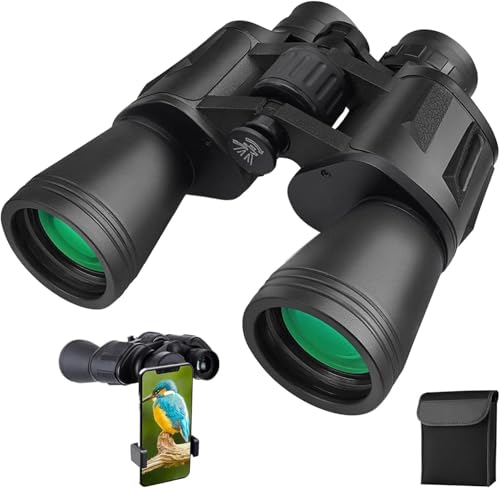
Allenjoy’s 20×50 binoculars deliver strong distant viewing with a 50mm objective lens and 20x magnification. They use BAK-4 prisms and FMC coatings to reduce light loss and improve image brightness. These models are suited for birding in open habitats where distance is a factor, and the larger objective lens helps in lower light conditions common near dawn or dusk. They are described as lightweight, making them practical for longer field sessions, though high magnification may require steady hands or a support method for crisp views.
Zoom Tube 8×32 Monocular

Nocs Provisions Zoom Tube 8×32 is a compact monocular designed for on-the-go birding. Weighing about 9.5 oz, it offers a bright field with fully multi-coated optics and Bak4 prisms. The IPX4-rated weather resistance guards against rain or fog, and the monocular is compatible with smartphone photography for quick field notes or sharing sightings. This option prioritizes portability and ease of use, making it ideal for hikers and travelers who want a quick-glance view without carrying heavy gear.
8×42 HD Binoculars

Adasion 8×42 HD binoculars strike a balance between magnification and stability. The 8x magnification and 42mm objective give a wide field of view and solid light transmission with BAK-4 prisms and fully multi-coated lenses. The package includes a phone adapter and tripod compatibility, enabling steady photos or videos of birds in the field. This build is well-suited for general bird watching, exploration, and travel where versatility matters.
20×50 High Powered Binoculars

FLYANT’s 20×50 high-powered binoculars are designed for distant viewing, offering up to 1000 yards of clear sight with a wide field at distance. They emphasize improved light transmission through multi-layer coatings and BAK-4 prisms, along with an enhanced eyepiece for comfort. These binoculars are intended for serious birding, marine observers, or performers at events where spotting details from afar matters. They are positioned as a robust choice for outdoor adventures and long-range observation.
12×25 Compact Binoculars
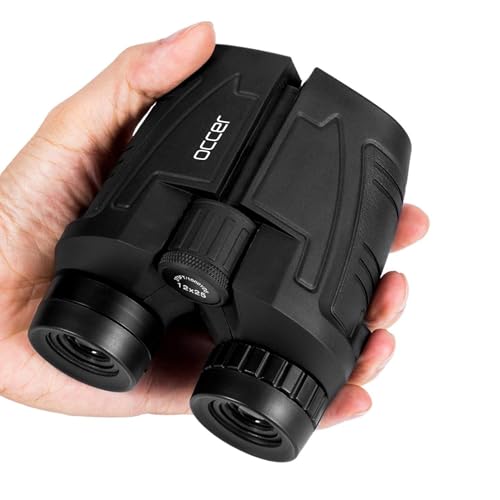
Occer 12×25 compact binoculars offer a higher magnification in a compact frame with an easy focus system. They feature FMC broadband coatings and Bak4 prisms to deliver bright and sharp images, making them suitable for quick bird observations during travel or outdoor outings. The design emphasizes portability while still providing enough magnification for detail in moderate viewing scenarios.
Buying Guide: Key Considerations For Bird Watching Gear
There are several factors to weigh when choosing bird-watching optics. Here are core considerations from multiple perspectives:
- Magnification vs. stability: Higher magnification reveals more detail but requires steadier handling or supports. For frequent hikes or windy environments, 8x to 12x often balances field of view and stability.
- Objective lens size: Larger lenses gather more light, improving performance in low light, but add weight. A 42–50mm objective is common for serious birding.
- Optical coatings and prisms: Fully multi-coated lenses and Bak4 prisms reduce glare and maximize brightness. FMC coatings help preserve color fidelity and edge-to-edge sharpness.
- Weight and ergonomics: Lightweight models reduce fatigue during long sessions. Some units offer ease-of-use features like adjustable eyecups for glasses wearers.
- Image stability options: Tripod or smartphone adapters are valuable for long-range viewing and photo capture, especially with high magnification binoculars.
- Weather resistance: IPX ratings and waterproof sealing help protect optics in rain, dew, or fog—common in birding environments.
- Monocular vs. binoculars: Monoculars are ultra-portable and convenient for quick scan or travel, while binoculars offer richer depth perception and a broader field of view.
- Budget and maintenance: Consider total cost of ownership, including cases, lens cloth, and potential replacements or repairs for rugged outdoor use.