Explore top large survival knives designed for camping, hunting, bushcraft, and harsh outdoor conditions. This guide highlights five proven models, detailing blade construction, handling, and practical features to help you choose a dependable tool for extreme environments.
| Product | Key Feature | Brand |
|---|---|---|
| Mossy Oak Survival Hunting Knife with Sheath | 15″ fixed blade; clip point with saw back; durable stainless steel; included sheath | Mossy Oak |
| Gerber Ultimate Survival Knife | Half-serrated drop point; integrated sharpening stone and ferro rod; emergency whistle | Gerber |
| FLISSA Survival Hunting Knife | 15″ fixed blade; clip point; rugged sheath; rubber handle | FLISSA |
| Mossy Oak 14-inch Bowie Knife | Full-tang rosewood handle; 8-1/2″ blade; strong 3CR13 steel | Mossy Oak |
| DRGSKL Japanese Fixed Blade Knife | High-quality D2 steel; walnut wood handle; full tang; detailed craft focused on precision | DRGSKL |
Mossy Oak Survival Hunting Knife With Sheath
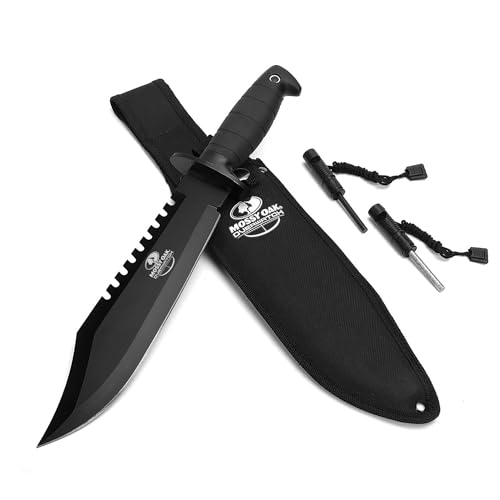
The Mossy Oak 15-inch fixed blade tactical knife is built for heavy-duty outdoor tasks. The blade measures 10 inches and uses 5/32 inch thick stainless steel, offering strong edge retention and rust resistance. The clip point design includes a saw-back section, optimal for camp tasks such as batoning, cutting, and creating kindling. A rubber grip provides non-slip handling, while the heavy-duty nylon sheath enables secure carry and belt compatibility, making this knife suitable for camping, bushcraft, and survival training.
Gerber Ultimate Survival Knife
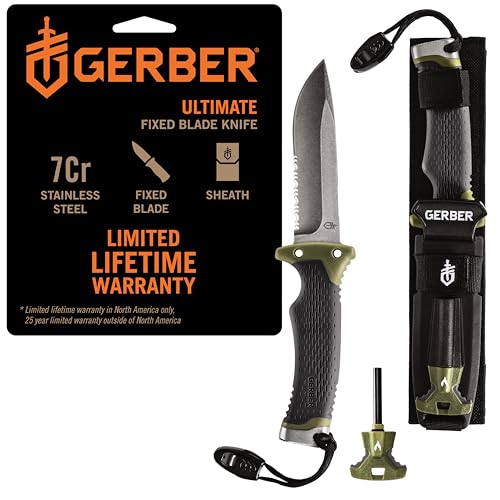
The Gerber Ultimate Survival Knife blends rugged durability with practical features for field use. It sports a half-serrated, stainless steel drop point blade and a textured rubber grip for reliable handling in wet or muddy conditions. The innovative sheath houses a sharpening stone and a ferrocerium rod fire starter, plus an emergency whistle. This knife is versatile for hunting, fishing, bushcraft, camping, and emergency preparedness, acting as a multi-tool in one compact package.
FLISSA Survival Hunting Knife With Sheath

FLISSA offers a 15-inch fixed blade tactical knife featuring a 10-inch blade and 5/32-inch thickness. The clip-point edge is stainless steel, with a saw-back and black anodizing to withstand rugged outdoor use. The rubber handle ensures a stable, non-slip grip during demanding tasks, and the accompanying sheath with belt-clip design promotes safe and easy transport. Ideal for camping, hiking, survival training, or military scenarios, this knife emphasizes durability and practical field performance.
Mossy Oak 14-Inch Bowie Knife

This Mossy Oak Bowie Knife features a full-tang construction with an 8-1/2 inch blade and a rosewood handle. The 3CR13 stainless steel blade delivers edge retention and corrosion resistance, while the full tang design provides balance and strength for heavy-duty tasks like batoning and split-cut work. The brass pommel and guard add classic aesthetics and grip stability for extended use in outdoor environments.
DRGSKL Japanese Fixed Blade Knife

The DRGSKL fixed blade is crafted with premium D2 steel for durability and edge retention. The walnut wood handle, ergonomically shaped with an end ring, ensures secure handling in precision tasks. The full tang design delivers reliability during demanding bushcraft activities, and the decorative blade finish adds aesthetic appeal for collectors or dedicated knife enthusiasts.
Buying Guide: Key Considerations For Choosing A Large Survival Knife
- Blade material and hardness: Look for high-carbon stainless steels (e.g., 3CR13, D2) that offer sharp edges, good corrosion resistance, and edge retention under outdoor use.
- Tang construction: Full tang knives provide better durability and balance for heavy-duty tasks like batoning, prying, and processing wood.
- Blade geometry: Clip-point or drop-point designs are versatile for slicing, piercing, and general camp work. A serrated portion can aid in rope or cord tasks when needed.
- Thickness and weight: Thicker blades offer durability but add weight. For long treks, balance weight with rigidity to avoid fatigue.
- Handle material and grip: Rubber, G10, or wood handles should provide a secure, non-slip grip; consider ergonomics for extended use in cold or wet conditions.
- Sheath and carry system: A durable sheath with belt or MOLLE compatibility increases accessibility and protection when traveling or in survival scenarios.
- Additional tools: Built-in sharpeners, ferro rods, whistles, and hooks add value for survival readiness but may increase size and weight.
- Maintenance: Stainless steel handles corrosion resistance, but blade care (oil, cleaning) remains important to extend lifespan in varied climates.
- Regulatory and safety considerations: Some regions restrict blade length and configurations. Ensure compliance with local laws and safe storage practices.
- Intended use balance: Choose a knife that aligns with your primary activities—camping, bushcraft, hunting, or emergency preparedness—and consider backup options for specialized tasks.