Finding a kayak that supports a larger frame without sacrificing stability or comfort is essential for big or tall paddlers. This guide reviews five reliable options that balance wide hulls, ample weight capacity, and comfortable seating. Each product is evaluated for stability, seating comfort, storage, and ruggedness to help you choose the right fit for lakes, rivers, and coastal channels.
| Product | Brand | Capacity | Type |
|---|---|---|---|
| Pelican Catch Mode 110 | Pelican | Not specified (premium stability) | Sit-on-top fishing kayak |
| Pelican Catch Classic 100 Angler | Pelican | Not specified | Sit-on-top fishing kayak |
| Perception Rambler 13.5 | Perception | Not specified | Tandem sit-on-top recreational |
| Perception Outlaw 11.5 | Perception | 425 lbs capacity | Sit-on-top fishing kayak |
| Lifetime Muskie Angler | LIFETIME | Not specified | Sit-on-top fishing kayak |
These five options emphasize stability, ease of entry/exit, and practical features that big paddlers value, such as wide decks, supportive seating, and ample storage. Below are detailed sections for each model to help you compare at a glance.
Pelican Catch Mode 110 Fishing Kayak

The Pelican Catch Mode 110 is designed for anglers who need stable and easy access. Its tunnel hull provides maximum stability and a wide, flat deck that helps you stand safely to cast and reel. The ERGOBOOST seating system offers adjustable, high seating for better visibility and comfort, including an EVA seat pad and under-seat storage. This model includes two 4″ rigging tracks for accessory setup, front and rear tank wells, two bottle holders, three flush mount rod holders, and an anti-slip deck carpet. Paddle/rod tie-downs help keep gear secure when hands are free. This kayak is ideal for big and tall anglers who value a steady platform and practical fishing features.
Pelican Catch Classic 100 Angler

The Pelican Catch Classic 100 Angler features a tunnel hull for remarkable stability and easy entry/exit. The ERGOCAST CLASSIC dual-position seating can be adjusted to a higher or lower position for comfort and support during long days on the water. It offers multiple storage options, including a front quick-lock hatch and a rear tank well with bungee cords, plus two flush mount rod holders and two 4″ rigging tracks for accessories. Paddle tie-downs and adjustable footrests add convenience, making this a solid choice for larger paddlers who want dependable stability and accessible gear organization.
Perception Rambler 13.5 Recreational Kayak
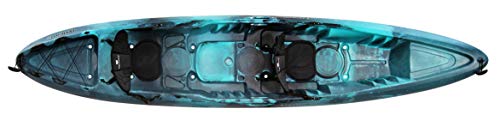
The Rambler 13.5 is a versatile tandem sit-on-top kayak designed for lakes, bays, light surf, and slow-moving rivers. It emphasizes stability and user-friendly handling, making it suitable for big paddlers who want a flexible platform for family trips or solo exploration. While it supports tandem use, its wide deck and stable hull reduce tipping risk, and it provides ample space for gear, seats, and comfort during extended sessions. It’s a solid option for users seeking a stable, USA-made craft with broad appeal for varied water conditions.
Perception Outlaw 11.5 Fishing Kayak
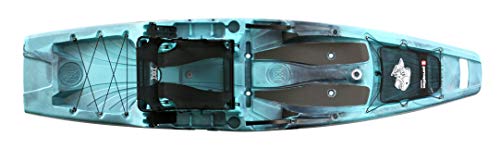
The Outlaw 11.5 is built with serious fishing in mind and offers a weight capacity of 425 lbs, ensuring stability and performance for larger paddlers. The fold-away Frame seat enhances comfort, and the sit-on-top design supports easy entry and exit. Four integrated rod holders, front storage, and a rear tankwell provide substantial storage for gear and tackle. The design also includes two additional accessory eyelets and two 4″ rigging tracks to add gear, along with paddle tie-downs for hands-free operation. This model balances comfort, storage, and fishing-specific features for bigger anglers.
Lifetime Muskie Angler Sit-On-Top Kayak

The Lifetime Muskie Angler emphasizes robust construction and practical storage for anglers. Made from UV-protected high-density polyethylene, it features multiple footrest positions for different rider sizes and a stable flat bottom. The padded seat back and seat pad boost comfort during long days on the water, complemented by two flush-mounted rod holders and a top-mount fishing rod holder. A included paddle and a paddle keeper with shock cords help you manage gear efficiently, while two 6″ storage compartments in the rear and center provide accessible space for essentials.
Buying Guide: Key Purchase Considerations For Big Paddlers
- Weight capacity: Prioritize kayaks with generous load limits to avoid overloading. Look for models explicitly designed for heavier paddlers, with capacities near or over 400 lbs when possible.
- Stability: Wide hulls, tunnel or planing hull designs, and low centers of gravity improve balance. Sit-on-top configurations often offer easier re-entries and standing room.
- Seating comfort: Ergonomic seats with adjustable positioning and padding reduce fatigue on long trips. Removable or fold-away seats can help with versatility and transport.
- Storage and accessibility: Front and rear tank wells, dry storage hatches, and multiple rigging tracks enable organized gear access without cluttering the deck.
- Ease of entry/exit: Flared bows, stable decks, and roomy cockpits (or sit-on-top layouts) make boarding safer and simpler for larger paddlers.
- Material and build: Durable materials (HDPE or equivalent) withstand frequent use and exposure to sun. Pumps, paddles, and ballast options affect overall handling.
- Intended use: Choose between fishing-focused designs with rod holders and tank wells, or recreational models that prioritize speed and maneuverability for varied waters.
- Portability vs. stability trade-off: Inflatable options offer light transport but may compromise stiffness under heavy loads; rigid kayaks provide superior tracking and rigidity but can be heavier.
- Accessory compatibility: Consider compatibility with mounts, anchors, fishing gear, and option to upgrade with rails and tie-downs for gear management.
- Warranty and support: Brands offering robust warranties and helpful customer service reduce risk, especially with high-use gear.
In selecting a kayak for a larger frame, prioritize stability, comfort, and practical fishing or storage features. Evaluate how you plan to use the kayak—solo tours, family outings, or dedicated fishing trips—to identify the model that best matches your needs. Always verify on-site comfort with a test sit if possible, and ensure the model aligns with typical water conditions you’ll encounter.