Finding the right insulated sleeping pad is essential for comfort and warmth, whether you’re camping, backpacking, or car-camping. This guide highlights five top-rated insulated sleeping pads, covering different sleeping styles, warmth needs, and weight considerations. Each option balances warmth, durability, and packability so you can rest easy on chilly ground. Use the buying guide below to compare R-values, thickness, weight, and setup to match your outdoor plans.
Summary of Selected Products:
| Product | Brand | R-Value (approx.) | Weight | Key Benefit |
|---|---|---|---|---|
| TREKOLOGY Camping Sleeping Pad UL R7 | TREKOLOGY | 7.2 | ~2 lb | All-season insulation; compact; 4″ thick |
| Big Agnes Rapide SL 25×78 | Big Agnes | Up to 4.8 | Varies by size | Premium comfort; ultralight; modular sizes |
| Hikenture Camping Sleeping Pad | Hikenture | 6.2 | ~1.5 lb | Reflective aluminum insulation; lightweight |
| Gear Doctors ApolloAir 5.2 R-Value | Gear Doctors | 5.2 | ~17 oz | Compact, quick inflate, versatile |
| Gear Doctors Oxylus 4.3R-Value | Gear Doctors | 4.3 | ~2 lb | Self-inflating with foam core; durable |
TREKOLOGY UL R7 Insulated Sleeping Pad

The TREKOLOGY UL R7 sleeping pad is designed for all-season use, thanks to a 7.2 R-value that helps resist ground chill in diverse climates. This SGS-certified pad inflates to a spacious 70.8″ x 24″ with a 4″ thickness, reducing the chance of bottoming out and supporting side and back sleepers. At roughly 2 pounds, it balances warmth with packability for hikers and backpackers. Its compact packed size makes it easy to stash in a backpack without sacrificing sleeping comfort.
Key features include a robust insulation system, a lightweight build, and a roomy sleeping surface. The 70.8″ length accommodates most adults, while the 24″ width provides ample space for movement during sleep. The pad’s durability and water resistance are suited for varied terrain, and the SGS certification adds an extra layer of credibility for cold-weather use. The design favors quick inflation and reliable warmth, making it a strong choice for all-season trekkers who don’t want to trade comfort for portability.
TREKOLOGY Sleeping Pad – Ultra-Lightweight 4″ Pad

This TREKOLOGY variant mirrors the UL R7’s core strengths: 7.2 R-value insulation, lightweight construction, and a roomy 70.8″ x 24″ surface with 4″ thickness. Its compact packing profile targets backpackers who need significant warmth without adding bulk. The product emphasizes portability and resilience, offering a practical solution for campers who want reliable warmth in variable conditions while keeping a lean pack.
Big Agnes Rapide SL Insulated Sleeping Pad (25×78)

The Big Agnes Rapide SL line emphasizes premium comfort with a quilted top and offset I-Beam construction for stability. With an R-value up to 4.8, these pads are well-suited for three-season camping, providing warmth while maintaining a compact packed size. The 3.5″ thickness helps reduce sink-in while still delivering a cushioned sleep surface. Built from lightweight, durable materials, the Rapide SL series offers multiple sizes, ensuring an optimal fit for solo hikers and couples alike. You can pair with a closed-cell foam pad for extra thermal protection in colder environments.
Gear Doctors ApolloAir 5.2 R-Value Insulated Pad

ApolloAir combines compact packing with quick inflation and a high warmth-to-weight ratio. It inflates to 72.8″ x 22″ with a 3.2″ thickness, providing a comfortable sleeping surface that stays supportive even on uneven ground. Its packability is enhanced by a small carry pouch and a Pump Sack, allowing near-instant setup in under two minutes. The included repair kits and a durable valve system support long-term use, making ApolloAir a practical option for frequent campers seeking reliable insulation and portability.
Gear Doctors Oxylus 4.3R-Value Insulated Pad
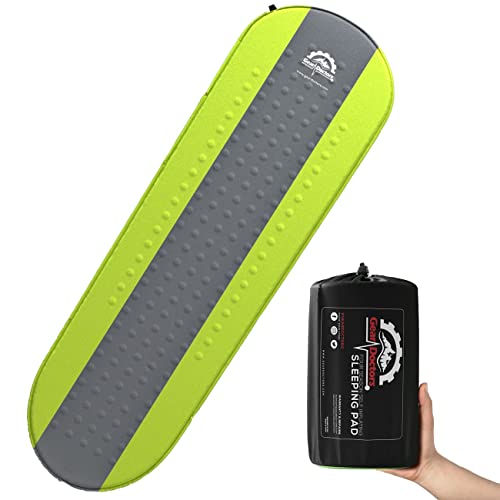
Oxylus combines a self-inflating foam core with a 4.3 R-value, delivering warmth and cushioning in a compact 72″ x 20″ area and a 1.5″ thickness. The 75D micro-coated shell enhances durability and resistance to moisture, while the self-inflating mechanism simplifies setup. Weighing about 2 pounds, this pad aims to balance warmth, weight, and ease of use for campers who want a straightforward, dependable solution for three-season trips. A strong option for casual hikers and frequent campers alike, with easy roll-and-pack features.
Buying Guide: Key Considerations for Insulated Sleeping Pads
- R-Value and Climate: Higher R-values provide better ground insulation. For 3-season use, aim for R-values around 4.0–5.0. For winter or cold climates, seek R-values 6.0 and above, or pair a pad with a reflective or foam support layer.
- Thickness and Comfort: Thicker pads reduce pressure points and prevent bottoming out. However, extra thickness adds weight. Balance sleeping position (side, back, stomach) with how much cushioning you want.
- Weight and Packability: Backpackers should favor ultralight designs that compress to small sizes. Car campers may tolerate heavier pads with higher warmth.
- Construction and Durability: Look for reinforced fabrics, heat-reflective films, and robust seams. Double-layer or offset I-Beam constructions improve comfort and stability.
- Inflation Method: Self-inflating pads save setup time, while smoothing valves and pump sacks speed inflation. Consider how easy it is to deflate and repack.
- Size Options: Solo pads come in various lengths and widths. If you’re tall or share with a partner, consider longer or wider options to maximize comfort.
- Weather Compatibility: Some pads are better suited for wet grounds or damp environments. Waterproof and abrasion-resistant shells extend pad life.
- Repairability and Warranty: Pads with repair kits or lifetime warranties offer added assurance on long trips or weekend adventures.
Selecting an insulated sleeping pad involves weighing warmth, weight, and user comfort. For all-season versatility, pads like TREKOLOGY UL R7 provide strong insulation and a roomy surface in a compact form. Premium designs from Big Agnes deliver high warmth with thoughtful ergonomics and multiple size options. For ultralight or quick-setup needs, Gear Doctors models emphasize portability and ease of use, while Hikenture and Oxylus offer a mix of heat reflection and foam-core self-inflation for reliable warmth on varied terrain.
When choosing, align your decision with your typical camping conditions, sleeping style, and how much you value ultralight packing versus extra warmth. If you often sleep on ground moisture or in cold ground, prioritize higher R-values and a design that minimizes air loss. For weekend hikers, a lighter, simpler self-inflating pad may be sufficient, while long expeditions may benefit from a pad offering superior durability and repair options.