For avid cyclists and fitness enthusiasts, a high-quality indoor bike combines quiet operation, sturdy construction, and interactive training options. The following five models represent current options that emphasize stability, adjustable comfort, app compatibility, and varied resistance. Use this guide to compare key features and choose the best fit for home training, apartment living, or consistent year-round riding.
| Brand | Model | Weight Capacity | Key Features |
|---|---|---|---|
| SLUNSE | Exercise Bike (Adjustable Magnetic Resistance) | 350 lbs | App compatibility, silent operation, adjustable seat/handle, sturdy aluminum frame |
| Schwinn Fitness | IC4 Indoor Cycling Bike | Not stated | JRNY membership, adaptive workouts, 200+ virtual courses |
| MERACH | Exercise Bike with App Support | 270 lbs | Merach app, Zwift/Kinomap compatibility, quiet magnetic resistance |
| YOSUDA | Exercise Bike with App Support | 300 lbs | Tablet holder, low noise, weight capacity, belt-driven |
| USLIM | Foldable Exercise Bike | 300 lbs | 16-level resistance, pre-assembled, near-silent |
SLUNSE Adjustable Magnetic Indoor Bike

The SLUNSE exercise bike centers on a robust, stability-focused frame designed to support up to 350 pounds. Its 35-pound flywheel and dual 7-shaped brake knobs provide smooth, progressive resistance. An ergonomic, triangular steel frame plus curved rear base reduces wobble across varied floor surfaces. The bike supports a wide height range (4’8″ to 6’1″) with a 2-way adjustable handlebar and 4-way adjustable seat, helping riders maintain correct posture during longer sessions. The aluminum alloy pedals include adjustable straps to prevent slips, enhancing safety during aggressive workouts.
App compatibility expands training options through popular platforms, enabling interactive workouts, virtual routes, and community challenges. The silent operation and solid construction make it suitable for homes, apartments, and shared spaces. A phone mount and digital monitor help track metrics and stay motivated. Overall, this model blends strength, comfort, and connected training into a single affordable package.
Schwinn Fitness IC4 Indoor Cycling Bike

The Schwinn IC4 focuses on immersive, trainer-led training through its JRNY ecosystem. The bike complements 200+ virtual courses and adaptive workouts that adapt to your pace and fitness level. Its belt-driven drive system emphasizes a smooth, low-maintenance ride with adjustable resistance. While specific weight capacity is not listed, Schwinn’s build quality is designed for steady, consistent workouts. Users typically pair this model with mobile or tablet devices to access guided sessions, tempo changes, and performance tracking, making it a strong pick for riders who value structured programs and virtual coaching.
MERACH Exercise Bike With App Support

The MERACH bike emphasizes a self-developed app experience, pairing with Merach and FantomFite for real-time metrics and in-depth data. It also supports Kinomap and Zwift, with data syncing to Google Fit and Apple Health. A reinforced inverted triangle frame and robust steel construction offer stability for loads up to 300 pounds, while an electromagnetic resistance system ensures a quiet, smooth operation. The combination of data-centric training and cross-app compatibility makes MERACH appealing for riders who want robust analytics and a broad ecosystem of workouts.
YOSUDA Exercise Bike With App Support

The YOSUDA model is built around a 30-pound flywheel and a belt-driven drivetrain for a smoother, quieter ride compared with chain-driven bikes. It supports up to 300 pounds and uses a sturdy steel frame designed for stability during high-intensity sessions. An adjustable cage pedal design enhances safety by preventing feet from slipping; the included tablet holder integrates with online workouts and training apps. The combination of a solid, quiet ride and app-friendly features makes this bike well suited for home gyms and apartment living.
USLIM Foldable Exercise Bike
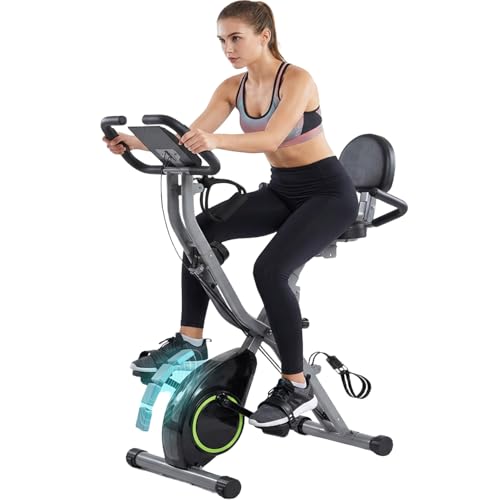
This foldable indoor bike offers a compact solution with 16-level magnetic resistance and a 6.6-pound aluminum-rimmed flywheel. The bike ships 70% pre-assembled, reducing setup time and making it easy to store after workouts. It operates with minimal noise, aided by a high-quality flywheel and reduced friction rope. With a 300-pound capacity and a space-saving foldable design, it provides versatile performance for users who need a convenient yet capable training option in smaller living spaces.
Buying Guide: Key Purchase Considerations
- Weight capacity and stability: Choose a model with a frame designed to minimize wobble on various floor surfaces. A higher weight rating generally indicates sturdier construction, important for high-intensity sessions.
- Resistance mechanism and noise: Magnetic resistance systems are typically quieter than belt or chain drives. If you live in an apartment or share walls, a quiet bike can be a major advantage.
- Adjustability for comfort: Look for adjustable handlebars and seats that accommodate a range of heights. A comfortable setup reduces fatigue and injury risk on longer rides.
- App compatibility and training options: If you value guided workouts, virtual routes, and performance tracking, prioritize bikes with robust app ecosystems (Zwift, Kinomap, JRNY, etc.).
- Pedals and safety features: Plateaus in long sessions can be mitigated by secure pedals with adjustable straps and solid toe cages. Ensure the pedal design matches your riding style.
- Footprint and storage: For smaller spaces, folded designs or compact frames help maximize living area when not in use.
- Maintenance and warranty: Belt-driven systems generally require less maintenance than chain-driven ones. Check warranty terms for frame, parts, and electronics.
- Intended use: If you plan on intense interval training or multi-user households, prioritize bikes with higher maximum user weights and stable frames.