Finding the right heart rate monitor for running helps you train smarter, track progress, and optimize pacing. The following picks represent a mix of chest-strap sensors and wrist-based models that deliver reliable heart rate, HRV data, and running metrics across devices and apps. Each product has a solid battery life, comfort, and broad compatibility to fit into most runners’ routines.
| Product | Key Benefit | Compatibility Notes |
|---|---|---|
| Garmin HRM 200 | Real-time HR and HRV data | Works with Garmin watches, cycling computers, apps |
| GARMIN HRM 600 | Advanced running dynamics | Standalone recording; compatible with Garmin devices |
| COROS Heart Rate Monitor | Comfort and multi-device pairing | Connects to COROS and up to three devices at once |
| POWR LABS Heart Rate Monitor Chest Strap | All-day comfort and long battery life | Works with 400+ apps and devices |
| CooSpo H808S | Dual Bluetooth & ANT+ for wide compatibility | Supports multiple devices; IP67 waterproof |
Garmin HRM 200 Heart Rate Monitor

The Garmin HRM 200 provides accurate real-time heart rate and heart rate variability (HRV) data to compatible Garmin smartwatches, cycling computers, fitness devices, and apps. The comfortable strap comes in two sizes (XS–S and M–XL) to fit a wide range of body types, ensuring a steady fit during runs. A user-replaceable battery supports up to about a year of use, depending on activity patterns. This model emphasizes reliable data transmission and easy compatibility with Garmin ecosystems, making it a solid choice for runners who rely on Garmin hardware or Garmin Connect.
Garmin HRM 600 Premium Heart Rate Monitor

The Garmin HRM 600 Premium offers precise heart rate data and HRV readouts with running dynamics features that help runners optimize form. It uses a comfortable, machine-washable strap available in XS–S and M–XL, providing a secure fit over long sessions. The device can record standalone activity data and sync with Garmin watches, cycling computers, and apps that support Garmin standards. For runners seeking deeper insights into pace, stride, and balance across steps, this model extends analytics beyond basic heart rate.
COROS Heart Rate Monitor

The COROS Heart Rate Monitor armband focuses on comfort and precision for sports activities. It can pair with COROS watches and apps and supports simultaneous connections with up to three devices. The soft fabric band is designed to be breathable and easy to clean, reducing irritation during long runs. Note that it is intended for sports data collection rather than daily heart rate tracking, and it uses Bluetooth connectivity (no ANT+). This makes it a strong option for runners who value versatile device pairing and a comfortable wear.
POWR LABS Bluetooth and ANT+ Heart Rate Monitor Chest Strap

The POWR LABS chest strap combines ANT+ and Bluetooth 4.0 for broad compatibility with Garmin, Wahoo, Polar, Peloton, and more than 400 fitness apps. It emphasizes all-day comfort with a soft fabric band that stays in place without chafing during long workouts. A standout feature is its extremely long battery life, with a replaceable battery designed to last hundreds of hours of training. Pairing should be completed before use to minimize connection issues, making it a dependable workhorse for varied training environments.
COOSPO H808S Heart Rate Monitor Chest Strap
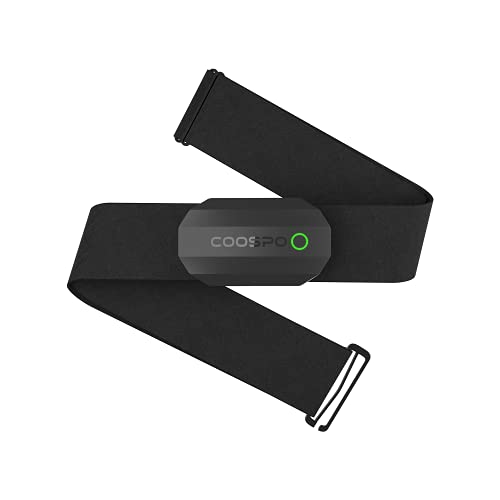
The CooSpo H808S supports Bluetooth 4.0 and ANT+ for flexible pairing with multiple devices. It combines precise real-time heart rate data with robust connectivity to support a variety of training setups, including running, cycling, and gym workouts. The strap is designed to be comfortable during long runs, and the company offers warranty and responsive support for its sensors, making it suitable for runners who value dependable cross-device compatibility.
Buying Guide
- Accuracy and data depth: Chest straps generally offer more precise heart rate and HRV data, which can be essential for threshold training and long-term trend analysis. Wrist-based monitors improve convenience but may vary in accuracy during high-intensity runs.
- Comfort and fit: Look for adjustable straps, soft materials, and two or more size options to minimize chafing during long runs. Comfort directly impacts consistency of data collection.
- Battery life and durability: For runners who log frequent runs, long battery life and easy battery replacement reduce downtime. Water resistance and ruggedness matter for outdoor sessions.
- Connectivity and compatibility: Ensure the monitor supports your devices and apps (Bluetooth, ANT+, or both). Compatibility with common platforms (Garmin, COROS, Wahoo, Peloton) broadens training options.
- Real-time data vs. standalone recording: Decide if you want live metrics on a watch or the ability to record data independently. Standalone modes can be useful for training with multiple devices.
- Additional metrics: HRV, stride analysis, and running dynamics can provide deeper insights. Some models offer these features only with compatible watches or apps.
- Maintenance: Washability and ease of cleaning (especially for fabric straps) extend the life of the monitor and improve hygiene.
When choosing, consider your typical training environment, preferred devices, and whether you prioritize precision over convenience. For competitive runners or those focusing on threshold pacing, a chest strap with accurate HR and HRV metrics paired with a compatible watch often yields the best data. For casual runners who value quick setup and ease of use, a reliable wrist-based monitor or a comfortable strap with broad app compatibility can be ideal.