Choosing a reliable front suspension fork can dramatically improve control, comfort, and climbing efficiency on varied terrain. This guide highlights top front forks designed for 26, 27.5, and 29-inch mountain bikes, featuring travel ranges from 100 mm to 180 mm. Each pick balances stiffness, weight, and adjustability to handle XC, AM, and all-mountain riding. Use this overview to compare travel, lockout options, rebound damping, and material construction when upgrading your MTB suspension.
| Brand | Model | Travel | Steerer | Lockout | Weight (approx) | Link |
|---|---|---|---|---|---|---|
| BUCKLOS | Travel 140mm Air Suspension Fork | 140 mm | 1-1/8″ Straight | Yes (Crown Lockout) | ~1976 g | Amazon |
| BUCKLOS | Travel 100mm Suspension Fork | 100 mm | 1-1/8″ Straight | Manual Lockout | ~2598 g | Amazon |
| ZTZ | Air Suspension Fork 120mm | 120 mm | 1-1/8″ Straight / Tapered | Remote Lockout | ~1800 g | Amazon |
| BUCKLOS | Travel 120mm Air Suspension Fork | 120 mm | 1-1/8″ Straight/Tapered | Manual/Remote Lockout | ~1737 g | Amazon |
| BOLANY | Suspension Fork 100mm | 100 mm | Straight/Tapered | Lockout | Unknown | Amazon |
id=”BUCKLOS-140″>BUCKLOS 140mm Travel Front Fork With Rebound Adjust

BUCKLOS delivers a robust 140 mm travel front suspension aimed at versatile XC and AM riding. The fork uses 34 mm aluminum-magnesium alloy uppers for rigidity, helping precise steering on rough sections. It features crown lockout and a 20-click external rebound adjustment to tailor cushioning. A 28.6 mm threadless straight steerer and 9×100 mm QR enable straightforward installation on many modern frames. With a maximum tire width around 3.0 inches, this fork suits mid- to aggressive-outline setups while maintaining a manageable weight for all-day rides.
id=”BUCKLOS-100″>BUCKLOS 100mm Front Fork With Manual Lockout

This 100 mm travel fork emphasizes comfort and control for cross-country and light trail riding. It uses a 28.6 mm straight tube with a 30 mm crown race and a 9 mm QR. Manual lockout helps optimize efficiency on climbs and smooth sections. The ABS-adjustable dampening lets riders fine-tune suspension stiffness for varying terrain, while the design includes a 36 mm offset and a weight around 2.6 kg, making it a stable upgrade for riders seeking reliable performance without excessive weight.
id=”ZTZ-120″>ZTZ Air Suspension Fork 120mm for Mountain Bikes

Offering 120 mm of travel with 9 mm QR and a 1-1/8″ straight steerer, the ZTZ fork emphasizes lightweight performance. It adds remote lockout and rebound adjustment to adapt to climbs and descents. Constructed from aluminum and magnesium alloys, it weighs roughly 1.8 kg, delivering a favorable power-to-weight ratio. The air pressure is adjustable to suit rider weight and terrain, supporting a responsive ride across XC and AM trails while maintaining solid stiffness through long descents.
id=”BUCKLOS-120″>BUCKLOS 120mm Travel Front Fork With Push-Button Lockout
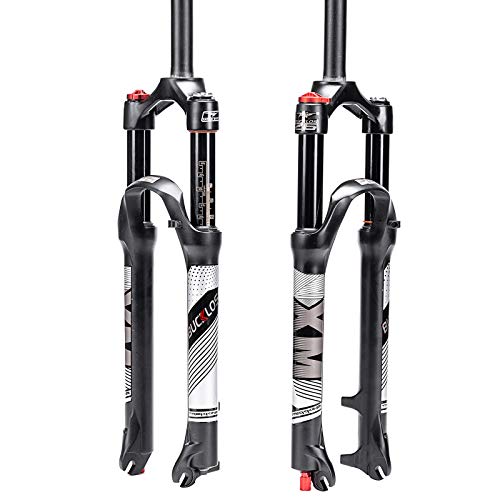
This 120 mm BUCKLOS model blends a lightweight frame with solid damping control. It features a 28.6 mm threadless tapered steerer, crown lockout, and a 9×100 mm QR. The fork is built from aluminum and magnesium alloys, tipping the scales around 1.7 kg. External rebound adjustment and ABS-based manual damping support tailored responses to rider weight and terrain. Its travel is suitable for aggressive XC and some enduro applications, helping maintain traction across varied surfaces while keeping the steering sharp.
id=”BOLANY-100″>BOLANY 100mm Front Fork For Mountain Bikes

Designed for 26/27.5/29 inch bikes, this 100 mm travel fork uses a straight or tapered steerer with 9 mm QR. It supports remote and manual lockouts, plus an air-adjustable system to tailor pressure to rider weight and conditions. The fork’s aluminum-magnesium alloy construction is marketed for durability and stiffness, enabling reliable handling on ruts and roots while preserving a concise weight footprint for nimble climbs and intermediate descents.
Buying Guide
Key considerations when selecting a front fork for a mountain bike include travel range, steering compatibility, lockout type, and weight. Travel determines how much cushion you’ll have on drops and square hits—higher travel suits enduro and big-hit trails, while 100–120 mm is common for XC and light trail riding. Steerer tube type (straight versus tapered) affects frame compatibility; verify headset sizing on your bike. Lockout options (manual, crown, or remote) impact efficiency on climbs and long climbs. Rebound control and damping characteristics influence how quickly the fork returns to its resting position after a hit. Material choices (aluminum, magnesium blends) balance stiffness with weight. For riders prioritizing lightweight agility, models around 1.7–1.8 kg offer favorable performance, while heavier forks may provide added durability for rougher terrain. Consider tire clearance, as some forks cap at 3.0 inch tires, while others support wider setups. Finally, ensure your selection aligns with your riding style—XC, AM, or enduro—and with your bike’s geometry to maintain predictable handling and steering precision.
Comparative Perspectives
- Performance vs. weight: Lighter forks improve acceleration and climbing, but may sacrifice bottoming resistance on big hits. Heavier forks tend to feel stiffer and more stable on descents.
- Lockout versatility: Remote lockouts are convenient on steep climbs and technical sections, while crown or manual lockouts offer simple, reliable operation with fewer potential failure points.
- Durability and maintenance: Forks with robust upper tubes and reliable damping systems require less frequent servicing but can be pricier. Aluminum-magnesium blends tend to balance weight with rigidity.
- Compatibility: Always confirm steerer length, axle standards (QR), and wheel compatibility before purchase to avoid frame interference or installation issues.