When it comes to backpacking, having a reliable foam sleeping pad can make all the difference in comfort and warmth. These pads offer durability, lightweight design, and insulation critical for outdoor sleeping. Here is a quick comparison of top-rated foam sleeping pads designed for backpacking:
| Product | Brand | R-Value (Insulation) | Weight |
|---|---|---|---|
| Therm-a-Rest Z Lite Original | Therm-a-Rest | 1.7 | Lightweight |
| THINTON Foldable Closed Cell Foam Pad | THINTON | 2.1 | 455 grams |
| Featherstone Outdoor El Cordion Insulated Pad | Featherstone | 2.1 | Ultralight |
| Therm-a-Rest Z Lite Sol Camping Pad | Therm-a-Rest | 2.0 | Compact |
| REDCAMP Closed Cell Foam Sleeping Pad | REDCAMP | 2.1 | Lightweight |
Therm-a-Rest Z Lite Original Camping and Backpacking Sleeping Pad

The Therm-a-Rest Z Lite Original is a durable and economical option with a trusted reputation among mountaineers and backpackers. Its closed-cell foam design uses accordion-style folding for easy packing and transport. The dimples in the padding trap and capture heat, providing additional warmth with an R-value of 1.7. Lightweight but rugged, this pad offers dependable insulation and cushioning, ideal for those seeking a compact sleep solution without sacrificing durability or comfort.
THINTON Foldable Closed Cell Foam Camping Mattress

This THINTON foam sleeping pad offers a generous open size of 70.8 by 23.6 inches, making it spacious for most sleepers. Made from ergonomic closed-cell IXPE foam and backed with an insulating aluminum film, it supports pressure points and captures body heat efficiently. The pad weighs 455 grams and folds compactly for easy carry. With an insulation rating of R-2.1, it excels in retaining warmth for cool nights, perfect for ultralight backpackers who want comfort combined with moisture resistance.
Featherstone Outdoor El Cordion Insulated Sleeping Pad
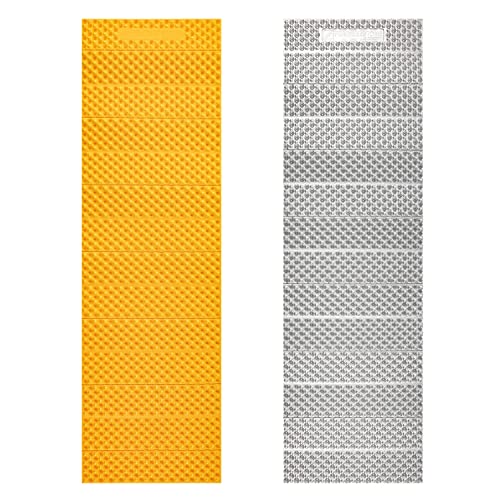
The Featherstone El Cordion stands out with its irradiation cross-linked polyethylene foam combined with dual-density heat reflective film, enhancing warmth and insulation. It provides 40% more ground coverage and greater thickness than typical egg-crate foam pads, improving comfort and insulation efficiency. With an industry-standard tested R-value of 2.1, this ultralight pad guarantees durable warmth and peace of mind, ideal for thru-hikers and backpackers who need reliable insulation without the risk of deflation.
Therm-a-Rest Z Lite Sol Camping and Backpacking Sleeping Pad

Building on the classic design, the Therm-a-Rest Z Lite Sol adds a reflective ThermaCapture coating and heat-trapping dimples which increase overall warmth by 20%. The folding closed-cell foam pad maintains its iconic accordion style for ultralight, compact packing. Its R-value of 2.0 offers enhanced insulation compared to the original, making it a popular choice for backpackers seeking lightweight warmth and durability in rugged terrain.
REDCAMP Closed Cell Foam Sleeping Pad for Camping

The REDCAMP Closed Cell Foam Sleeping Pad offers a roomy 22-inch width and sufficient thickness (0.75 inches) for pressure relief. It is lightweight and folds easily, suitable for carrying on long hikes. The pad features an R-value of 2.1, effectively blocking ground chill and retaining body heat. Made with durable closed-cell foam, it is well-suited for various terrains and different weather conditions, providing both insulation and comfort for extended outdoor adventures.
Buying Guide for Foam Sleeping Pads for Backpacking
Insulation and R-Value
The R-value measures a sleeping pad’s insulation capability. Backpackers should select a pad with an R-value appropriate for expected temperatures—generally, 1.5 to 2.5 suits three-season use, while colder conditions require higher values.
Weight and Portability
Ultralight foam pads are preferable for backpacking due to weight restrictions. Consider materials like closed-cell foam and designs like accordion folds for maximized compactness and ease of packing.
Durability and Material
High-density closed-cell foam offers excellent durability, often essential for rough terrains. Look for pads that resist punctures and compressions to withstand frequent outdoor use.
Comfort and Thickness
Foam pads vary in thickness generally between 0.5 and 1 inch or more. Thicker pads provide better cushioning but may add weight and bulk. Some pads feature ergonomic surface patterns to aid pressure distribution.
Water Resistance
Closed-cell foam pads inherently repel water and dry quickly, crucial for damp ground conditions. Aluminum or reflective coatings on the pad back can enhance moisture resistance and thermal retention.
Packability and Shape
Folding or rollable foam pads save space when packed. Shapes such as rectangular or peanut-shaped pads impact how well the pad fits in your backpack and how it supports your body.
Multi-Purpose Use
Some pads double as sit pads or hammock underlays. Choosing a versatile pad broadens its usefulness for various outdoor activities.