For anglers who want hands-free propulsion and precise control, pedal-driven fishing kayaks are a game changer. This guide highlights five top options that prioritize stability, maneuverability, and comfort on various water conditions. Each model combines pedal drive systems with seating designed for long days on the water. Below, you’ll find quick insights and a buying guide to help compare features like pedal type, hull design, seating, and storage—without the glare of price or gimmicks.
| Product | Key Feature |
|---|---|
| Pelican Catch 110HDII Sit-On-Top | HyDryve II pedal system, Ergocast G2 seat, four gear rails |
| VETOMIRO Modular Fishing Kayak | Two-piece foldable design, forward/reverse propeller pedal drive |
| Pelican Catch Kicker 110 HDII | HyDryve II pedal system, Ergoboost seating, rudder for tracking |
| BKC Brooklyn 10.0 | Fast pedal drive, precise rudder steering, stable 10 ft hull |
| Reel Yaks Recon | Propeller drive, modular assembly, lightweight transport |
Pelican Catch 110HDII Sit-On-Top Fishing Kayak

The Catch 110HDII combines stability with streamlined pedal control. The HyDryve II pedal system offers efficient forward propulsion and easy maneuvering in shallow water or around vegetation, while the Ergocast G2 seating enhances all-day comfort. Four accessory rails allow anglers to tailor the setup for fishing, filming, or adding gear such as rod holders and cameras. This model emphasizes an accessible entry and reliable tracking for versatile water scenarios.
VETOMIRO Modular Fishing Kayak
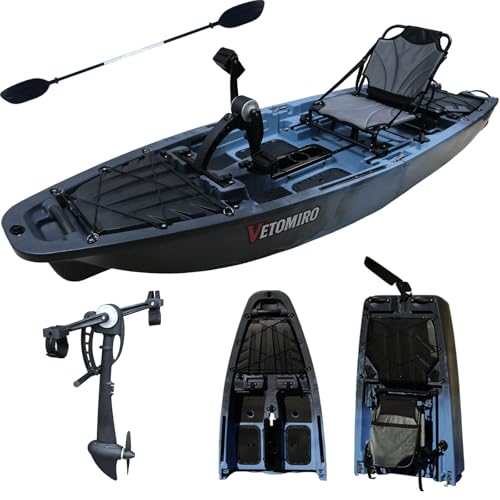
The VETOMIRO stands out for transportability with its two-piece foldable design. It separates into sections that fit into an SUV trunk, reducing overhead for storage and travel. The forward and reverse propeller pedal drive delivers hands-free propulsion and precise positioning for casting, while the HDPE construction promises durability and UV resistance for long-term outdoor use. This model prioritizes convenience without sacrificing on-water performance.
Pelican Catch Kicker 110 HDII

The Catch Kicker 110 HDII emphasizes stable tracking with a rudder-assisted setup and the Ergoboost seating system for an elevated view while fishing. The HyDryve II pedal system powers longer expeditions, and the stable hull design helps maintain balance during casts and reeling. Pedal adjustments accommodate multiple users and ensure a comfortable pedaling posture across water types.
Brooklyn 10.0 Single Pedal Kayak by BKC
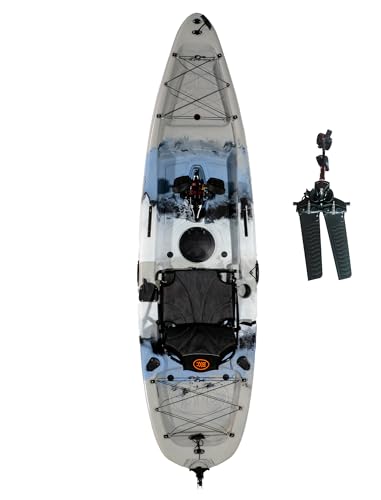
The Brooklyn 10.0 introduces a fast, efficient propeller-driven pedal system that enables hands-free propulsion and rapid acceleration. The hand-operated rudder provides precise, responsive steering for tight turns or long stretches, while the 10 ft hull delivers stability and portability. Weight capacity supports gear and catch without compromising maneuverability on lakes and calm rivers.
Reel Yaks Recon Modular Fishing Kayak
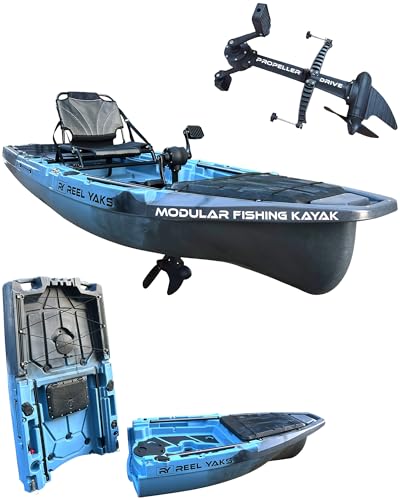
The Recon offers a modular approach with a powerful propeller drive and simple assembly. Its lightweight sections simplify transport and storage, making it suitable for anglers who frequently move between fishing spots. The design supports compact journeys yet maintains the capacity and stability needed for extended trips with gear.
Buying Guide: Pedal-Drive Fishing Kayaks
- Propulsion type: Pedal drives differ in design (propeller vs. fin). Propeller drives enable reverse motion for tighter maneuvering, while fin-based systems can be simpler and lighter but often provide less precise reverse control.
- Hull design and stability: A wider, flatter deck improves standing stability and casting comfort; tunnel or multi-chine hulls can influence tracking in chop. Consider water conditions you frequent.
- Seating and comfort: Look for adjustable, cushioned seats with back support. Ergonomic seating reduces fatigue on long days and can improve visibility while scanning for fish.
- Storage and accessory rails: Quick-access gear rails, dry storage, and rod holders help keep essential items organized and reachable during trips.
- Portability: Foldable or modular designs aid transport and SUV/trunk storage. Weight and disassembly steps impact how often you’ll move or store the kayak.
- Rudder and steering: Rudder systems improve tracking, especially in wind or current. Ensure steering is responsive and easy to operate from a seated position.
- Durability and materials: HDPE hulls are common for their strength and UV resistance. Consider UV exposure, abrasion protection, and the anticipated use environment.
- Maintenance: Pedal systems require occasional lubrication and inspection of moving parts. Check warranty and replacement part availability for long-term ownership.
- Budget and use case: Balance the pedal complexity, seating comfort, and storage with planned fishing environments—lakes, rivers, inshore saltwater—and the volume of gear you typically carry.
Note: This article provides objective comparisons based on features, hull design, and user-focused considerations. Prices, availability, and model updates can vary by retailer and season.