Finding fish and understanding water depth in shallow waters is essential for kayak, ice, and shore anglers. This guide reviews portable depth finders and fish finders tuned for shallow environments, highlighting how they display water depth, bottom contour, and potential fish locations. All picks are compact, easy to use on small boats or kayaks, and offer reliable readings in low light or bright sun.
Summary of Selected Products
| Product | Brand | Key Depth Range | |
|---|---|---|---|
| LUCKY Kayak Portable Fish Depth Finder | LUCKY | 3 ft to 328 ft | LCD Display, handheld |
| Copkim 4 Pack Depth Finder Ice Fishing | Copkim | Bottom-focused depth for ice fishing | Clip-on depth indicators |
| Venterior Portable Rechargeable Fish Finder | Venterior | 2.6 ft to 164 ft | Color TFT display, wireless |
| LUCKY Water Depth Fish Finders | LUCKY | Up to 328 ft | Waterproof handheld with depth & fish readouts |
| HawkEye DT2BX-TM In-Dash Depth Sounder | Hawkeye | 2.5 ft to 600 ft | In-dash display with transom transducer |
LUCKY Kayak Portable Fish Depth Finder
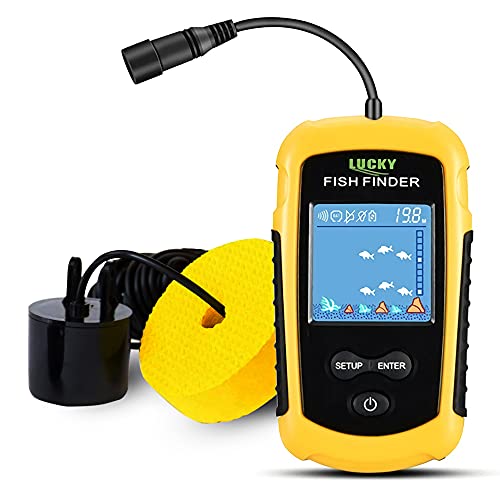
The LUCKY handheld depth finder is designed for one-handed use on kayaks or small boats. It displays approximate fish locations and water depth with a sonar transducer that can be attached to hulls to monitor depth while moving. Its depth range spans from 3 feet to 328 feet when fully submerged, making it suitable for shallow-to-mid-depth scenarios. The device also shows bottom features such as weeds, sand, and rocks, with the option to switch between feet and meters. Backlighting improves readability in bright sun or darkness, and five sensitivity levels help adapt readings to clear water or turbid conditions.
Copkim 4 Pack Depth Finder Ice Fishing

Copkim offers a quartet of clip-on depth finders for ice fishing and other shallow-water activities. Clip them onto lines to gauge bottom depth directly, enabling precise depth settings for floats and rigs. The devices are built with heavy-duty lead-cast clips, designed to resist bending or breaking. Fluorescent coating improves underwater visibility, complemented by UV resistance for day or night tracking. They are a practical choice for quick depth checks in ice, lakes, rivers, and coastal waters.
Venterior Portable Rechargeable Fish Finder

This wireless fish finder uses a castable sonar sensor linked to a color TFT LCD display. It reads water depth, temperature, fish size, fish depth, and bottom contour, with 105-degree sonar beam. Depth range extends from about 2.6 feet to 164 feet, and unit conversion for depth and temperature is available. The system supports both work and simulation modes, and the sensor can be tethered to lines for long casts without hull installation. A 262-foot wireless range facilitates readings far from the display.
LUCKY Water Depth Finders Waterproof Handheld

This waterproof handheld finder provides water depth and approximate fish location with a focus on portability for kayak and small boat use. It reports water depth, fish size, and bottom details like weeds, sand, and rocks. The product includes a 45-degree beam angle sonar transducer with an impressive depth detection capability up to 328 feet. It ships with a 25-foot extension cable and a float, and is USB rechargeable via built-in battery, making it a versatile option for freshwater and saltwater contexts alike.
HawkEye DT2BX-TM In-Dash Depth Sounder

The HawkEye DT2BX-TM is an in-dash depth sounder designed for boats traveling up to 60 mph. It delivers continuous depth readings from 2.5 to 600 feet on a large display. The system includes a transom-mount transducer with 30 feet of cable and a three-stage warning system featuring audible and visual alarms with muting. This option suits deeper shallow-to-mid-range water while offering robust alarms and a multi-functional display for on-board navigation and depth awareness.
Buying Guide: Key Purchase Considerations
- Water depth range: Match the device’s maximum depth to your typical fishing or paddling environment. Shallow-water angling often benefits from devices that excel in the 2–200 ft range, but some models cover deeper readings if you fish near channels or structure.
- Transducer setup: Clip-on and handheld units offer portability, while in-dash or hull-mounted transducers provide continuous readings without manual deployment. Consider whether you paddle, kayak, or fish from shore when choosing.
- Display readability: For bright sun or low-light conditions, choose a model with backlighting or a high-contrast color display. Some options include color TFT displays and adjustable background colors for day or night use.
- Bottom contour and aquatic features: Depth finders that identify weeds, rocks, sand, and branches help locate promising spots in shallow water and avoid snags. Look for units with bottom-contour readouts and water-bottom differentiation.
- Battery life and power source: Rechargeable units are convenient for frequent use, while disposable batteries may offer travel simplicity. Check run-time estimates and whether the device preserves settings after power-off.
- Portability and mounting: Handheld or neck-strap designs are ideal for kayaks and inflatable boats, while clip-on devices suit ice fishing and quick deployments. Ensure the mounting method fits your gear.
- Connectivity and resilience: Waterproofing and protection against splashes are important for fishing in rain or spray. Wireless models reduce hull integration but require reliable range between sensor and display.
- Data interpretation: Some models deliver fish size estimates, water temperature, and bottom shape. Decide how many data points you need to make quick, actionable decisions on the water.