Finding the right crash pad matters for bouldering enthusiasts and gym climbers alike. This guide highlights five top-rated options that balance cushioning, durability, and portability. Each product is evaluated for open-area coverage, foldability, and carry comfort to help you choose the best pad for your terrain and climbing style.
| Product | Brand | Open Size (approx.) | Key Benefit |
|---|---|---|---|
| Meister Boulder Beast XL | Meister | 72″ x 44″ x 5″ | |
| DRKSBESTO Tri-Fold Pad | DRKSBESTO | 71″ x 39″ x 4″ | |
| Asana VersaPad (Open) | Asana Climbing | 74″ x 44″ x 1″ | |
| Escape Climbing Couch Pad | Escape Climbing | Designed to fit most full-size pads | |
| We Sell Mats BiFolding Pad | We Sell Mats | 4’ x 8’ (foldable options) |
Note: All prices and availability are subject to change. This guide presents objective features to compare padding quality, size, and portability for American climbers.
Meister Boulder Beast XL Tri-Fold Review

The Meister Boulder Beast XL is a tri-fold crash pad designed for maximum surface coverage and durable protection. When unfolded, it spans roughly 72 inches by 44 inches with a thickness of about 5 inches, aimed at absorbing hard landings on short walls and highballs. The pad comprises four foam layers per panel, delivering a total padding thickness of 5 inches across the mat’s surface. An integrated corner carpet square helps climbers brush debris from footwear before a climb, reducing dirt transfer to the pad and wall holds. For transport, removable backpack straps with a waist belt and chest strap provide hands-free carrying options, complemented by duffel-style handles. Folded dimensions are roughly 44″ x 24″ x 15″, making it easier to haul to the crag. This pad prioritizes surface area and multi-layer cushioning, suitable for climbers who value a generous landing zone and straightforward transport.
Key considerations:
– Pros: Large landing area, multi-layer foam construction, shoulder and chest straps for carrying, debris-cleaning feature, durable exterior.
– Cons: Heavier than smaller pads, may require extra setup space at busy crags.
– Best use: Short walls, highballs, and scenarios where a broad landing surface reduces risk during landings.
DRKSBESTO Tri-Fold Pad With Upgraded Carrying System
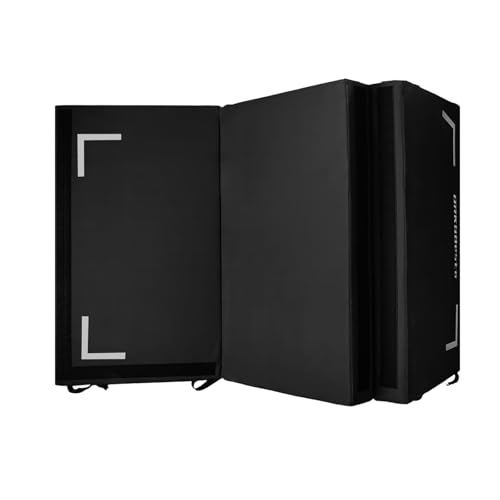
The DRKSBESTO Tri-Fold Pad emphasizes portability without compromising safety. When opened, it measures about 71″ x 39″ x 4″, offering a spacious landing zone, while folding down to a compact 39″ x 24″ x 12″ for easy transport. The pad weighs around 9.9 pounds, making it a practical option for climbers on the go. Construction uses 600D Oxford fabric with an anti-slip surface, paired with an 18D high-density foam core for strong shock absorption and quick rebound. The pad’s carrying system is upgraded with wider and thicker adjustable shoulder straps and secure upper and lower bands to fix the mat during transport, improving balance and reducing shifting on uneven terrain. This pad suits climbers who want dependable padding that travels well between different crags.
Key considerations:
– Pros: Strong portability, durable exterior, enhanced carry system, reliable rebound.
– Cons: Among mid-sized pads, may not cover as large a landing as full-size pads.
– Best use: On-the-go bouldering trips, gym-to-crag commutes, and travel-friendly setups.
Skil-Care 5′ x 5′ Sensory Pad

Although marketed for sensory rooms and kids’ use, the Skil-Care 5′ x 5′ crash pad offers a soft, cushioned landing suitable for gentle indoor climbs and therapeutic activities. It features durable foam under a rugged outer cover designed to withstand repetitive movement and impact. The pad’s size provides ample floor coverage for group activities or therapy spaces, and its tactile surface supports sensory regulation, calming essential movement for some climbers during cooldowns or quiet time. While not a traditional bouldering pad, it can function as a supplemental cushion for smaller workouts, mindfulness-based training, and indoor climbing environments where a soft landing zone supports varied activities.
Key considerations:
– Pros: Large surface area, soft foam, versatile in therapy and educational settings.
– Cons: Not optimized for aggressive outdoor bouldering or long drops.
– Best use: Indoor sensory spaces, classrooms, clinics, and calm training sessions.
Asana VersaPad – Supplemental Bouldering Pad

The VersaPad from Asana Climbing is designed as a supplemental pad that can bridge gaps between primary crash pads and provide sit-start support. Open dimensions measure 74″ x 44″ x 1″, offering a wide reach to bridge landing zones across multiple pads. The pad’s unique strength lies in its gap-covering ability, acting as a pile pad that minimizes rock hazards between mats. It is explicitly described as not a stand-alone pad to fall on, emphasizing its role as an additive tool alongside primary crash pads. It also serves as a firm sit-start surface due to its 3/4-inch closed-cell foam, ensuring reliable grip and stability for sit-start moves. This pad is ideal for climbers who crave flexibility in their pad setup and want to optimize landing continuity across several platforms.
Key considerations:
– Pros: Flexible use with other pads, effective gap coverage, firm sit-start surface.
– Cons: Not a standalone fall pad; requires compatible core padding.
– Best use: Complex pad arrangements, long routes with multiple pads, and sit-start practice.
Asana VersaPad – Open Version (Alternate Listing)
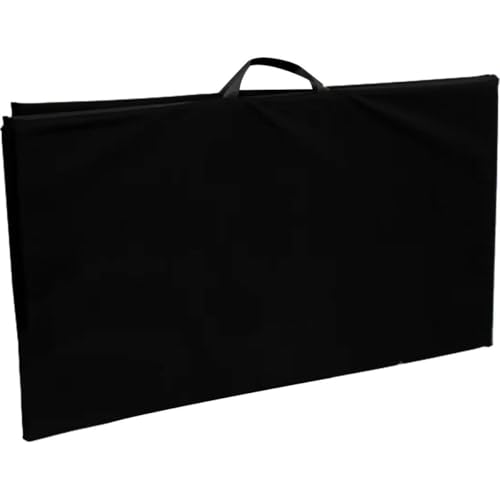
This alternate VersaPad listing reiterates the multifunctional role of the VersaPad, maintaining the same open dimensions of 74″ x 44″ x 1″. The description emphasizes versatile usage along with core crash pads, while preserving the same caveat that it is not a standalone landing pad. It reinforces the concept of a sit-start utility and a gap-covering function to reduce rock hazards during multi-pad setups, making it a practical accessory for climbers who run larger pad configurations or intricate routes.
Key considerations:
– Pros: Flexible enhancements to pad setups, remains lightweight, easy to stow.
– Cons: Not a primary landing mat; must pair with other pads.
– Best use: Gap bridging, sit-start practice, and complex pad layouts.
Escape Climbing Couch Pad – Versatile Lounger And Pad Support

The Escape Climbing Couch Pad combines a crash pad with a couch-like design, offering a lounge-friendly solution for gym lounges, van life, or backyard sessions. It’s built around a Baltic birch frame intended to provide durability while remaining portable for frequent travelers. The product emphasizes easy folding and storage, designed for quick setup without the use of tools. This pad suits climbers who prioritize comfortable social spaces around training — a practical add-on for cooling down, socializing at the gym, or staging longer sessions. It also doubles as a stable surface for resting between climbs or as a frame for casual gatherings around a bouldering area.
Key considerations:
– Pros: Multi-use as a couch and pad support, sturdy frame, easy to transport.
– Cons: Not a traditional standalone crash pad for falls.
– Best use: Gym lounges, van life, and hybrid spaces with social and training needs.
We Sell Mats BiFolding Gymnastics Crash Pad

The We Sell Mats BiFolding Gymnastics Crash Landing Mat is a transportable option designed for gymnastics, tumbling, wrestling, and similar training. Available in thickness options of 4″, 8″, or 12″, these mats provide robust impact protection for various activities. The mats are designed for easy mobility and storage, emphasizing portability for gym use and home practice. While primarily marketed for gymnastics, their reinforced foam core and resilient vinyl cover make them suitable as a general-purpose crash pad in smaller climbing setups or as supplementary padding when larger crash pads are impractical.
Key considerations:
– Pros: Strong shock absorption, foldable for storage, adaptable thickness options.
– Cons: May be bulkier than compact pads for tight crags.
– Best use: Indoor gyms, home climber setups, and multi-activity training spaces.
Buying Guide: Key Purchase Considerations And Comparisons
- Pad size and surface area: Larger pads offer more coverage and reduce risk on highballs or uneven ground, but require more storage and transport effort. Consider your typical climbing walls and travel distance when selecting a size.
- Thickness and foam composition: Higher thickness (e.g., 5 inches) usually provides better impact absorption but adds weight. Look for multi-layer foam configurations for balanced cushion and rebound.
- Portability and carry options: Pads with integrated backpack straps, wheels, or light frames improve on-the-go usability. For van-life climbers, lighter weight with secure carry features can be decisive.
- Durability and cover material: Heavy-duty fabrics (600D+), reinforced seams, and non-slip surfaces increase lifespan in outdoor environments and busy gym spaces.
- Versatility and compatibility: Supplemental pads like the VersaPad add flexibility to large pad setups, while couches and lounge-style pads offer space optimization for recovery and social areas around climbing gyms.
- Maintenance and cleaning: Easy-clean surfaces and removable covers simplify after-climb maintenance. A built-in debris-cleaning feature helps keep padding clean in dusty environments.
- Intended use: For outdoor bouldering, prioritize rugged, full-size pads with robust straps. For indoor gyms and travel, lighter, foldable, and compact designs often perform best.
- Budget and value: Compare price against features such as surface area, weight, and durability to determine overall value. Higher-end pads typically deliver longer lifespans and better rebound control.
- Usage scenarios: If you alternately climb with friends, a modular or gap-covering setup may be advantageous. In solo or van setups, a couch-style pad can provide both padding and seating.
- Safety certifications and warranties: While not always explicit, check for manufacturer guarantees on foam integrity and fabric durability to ensure long-term protection.
Overall, the best climbing crash pad choice hinges on where you climb (indoor gym vs. outdoor crag), how much surface area you need, how you transport the pad, and how you intend to use it beyond pure landings. The five options covered here balance cushioning and portability for a range of climber preferences, ensuring a safer and more versatile setup across different environments.