Maintaining the right chlorine level is essential for clean, safe, and healthy pool water. This guide reviews top products designed to help you manage chlorine effectively, including tablets, stabilizers, and neutralizers, to keep water clear and balanced throughout the season. Use this as a practical reference for choosing dependable chlorine tools and how to pair them with a reliable testing routine.
| Product | Brand | Best For | Links To |
|---|---|---|---|
| HTH 42049 Pool Care 1″ Chlorine Tabs | HTH | Slow-dissolving sanitizer with clarifier | Chlorine tabs for ongoing sanitation |
| AquaDoc Bromine & Chlorine Neutralizer | MAV AquaDoc | Lowering high chlorine or bromine levels | Chlorine/bromine reduction |
| In The Swim 3 Inch Stabilized Chlorine Tablets (10 lb) | In The Swim | Slow-dissolving, stabilized chlorine for steady chlorination | Long-lasting sanitization |
| In The Swim 3 Inch Stabilized Chlorine Tablets (50 lb) | In The Swim | Bulk stabilized chlorine for larger pools | Extended use and balance |
| Pool Mate 7-Pounds Stabilizer | Pool Mate | Cyanuric acid to reduce chlorine loss | Chlorine retention in sun |
HTH 42049 Pool Care 1″ Chlorine Tabs
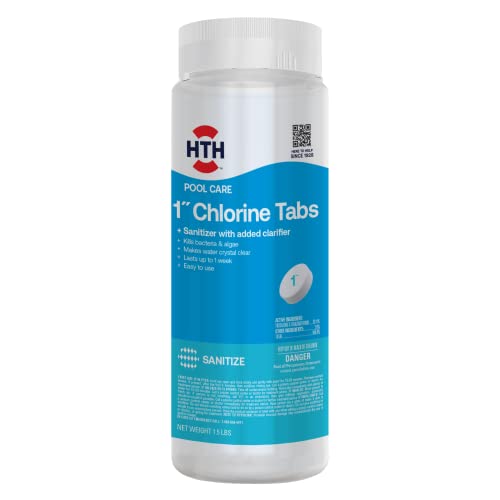
HTH Chlorine Tabs are designed to deliver slow-dissolving sanitization with an added clarifier for clearer water. These 1″ tabs target bacteria and algae while helping maintain consistent sanitizer levels, reducing the frequency of dosing. Ideal for regular dosing in feeders or floating dispensers, they are sun-protected to extend chlorine life and provide long-lasting sanitation.
- Long-lasting, slow-dissolving chlorine
- Includes clarifier for clearer water
- Protects against algae and bacteria
}
AquaDoc Bromine & Chlorine Neutralizer

This sodium thiosulfate-based neutralizer helps reduce elevated chlorine and bromine levels after shocking or over-chlorination. It supports balanced water conditions as part of routine maintenance. Easy to use and fast-dissolving, it distributes evenly through the pool when the filtration system runs.
- Reduces high chlorine and bromine levels
- Widely used neutralizer formula
- Simple to apply after testing
In The Swim 3 Inch Stabilized Chlorine Tablets (10 lb)

These tri-chlor tablets offer powerful sanitization with 90% stabilized chlorine. They are slow-dissolving for steady chlorination and are well-suited for use in floats or automatic feeders. The 99% active chlorine helps maintain clean, algae-free water across pool seasons, with reliable performance.
- 90% available chlorine
- Slow-dissolving and long-lasting
- Suitable for various feeders and floats
In The Swim 3 Inch Stabilized Chlorine Tablets (50 lb)

This larger bag provides bulk stabilized chlorine for bigger pools or high-use environments. The slow-dissolving formula ensures consistent chlorination while helping keep algae and bacteria at bay. It can be paired with automatic feeders for ongoing maintenance without frequent dosing.
- Bulk supply for larger pools
- Stable, slow-dissolving chlorine
- Supports automatic feeders and floaters
Pool Mate 7-Pounds Stabilizer

Pool stabilizer (cyanuric acid) helps protect sanitizer effectiveness from sunlight, reducing chlorine loss due to UV exposure. Maintaining an appropriate cyanuric acid level, typically in the 40–100 ppm range, improves chlorine efficiency and minimizes wasteful dosing.
- Reduces chlorine loss in sun exposure
- Boosts sanitizer efficiency
- Important for outdoor pools
Buying Guide: Key Purchase Considerations And Comparisons
When choosing chlorine-related products for a pool, consider system type (salt, chlorine tablet feeders, or floating dispensers), pool size, and climate. Important factors include:
- Chlorine Source Type: Tablets (stabilized or unstabilized), liquid, or granular forms impact dosing frequency and distribution. Stabilized forms reduce sun-related chlorine loss but can contribute to stabilizer buildup if overused.
- Stabilizers And Cyanuric Acid: Cyanuric acid protects chlorine from UV degradation. Monitor CYA levels to avoid over-stabilization, which can reduce sanitizer effectiveness.
- Test And Monitoring: Regular testing (free chlorine, combined chlorine, pH, and alkalinity) helps determine dosing needs. A reliable test kit or digital tester supports accurate adjustments.
- Water Balance: pH, alkalinity, and calcium hardness levels influence chlorine efficacy and water comfort. Maintain balanced water to prevent scaling or corrosion.
- Pool Type And Size: Larger pools require higher-volume dosing or bulk products. In-ground versus above-ground setups may dictate feeder compatibility and dosing schedules.
- Application Method: Tablets suit automatic feeders; neutralizers are useful after shocks or over-chlorination; stabilizers are key for outdoor pools with sun exposure.
In practice, a common approach is to use stabilized chlorine tablets for steady sanitization, a reliable test kit to track chlorine and pH, and a cyanuric acid source to protect chlorine in bright sunlight. Neutralizers are reserved for correcting high chlorine or bromine spikes. These choices should align with pool size, fixture type, and local climate to maintain comfortable, clear water while avoiding over-chlorination or chemical buildup.