Ready to keep blades razor-sharp in the wild? This guide reviews top camping knife sharpeners that balance field practicality with durable performance. From compact pocket tools to field-tested guided systems, these picks cover serrated blades, gut hooks, and standard edges alike. Each product below is designed to be a reliable, portable solution for hikers, campers, and outdoor enthusiasts seeking consistent edges without fuss.
Summary of selected products:
| Product | Brand | Key Benefit | Edge Type |
|---|---|---|---|
| SHARPAL 101N 6-in-1 Pocket Knife Sharpener | SHARPAL | All-in-one with fire starter and whistle | Coarse carbide, fine ceramic, diamond rod |
| Work Sharp Guided Field Sharpener | WORK SHARP | Complete field sharpening with guided angles | Diamond plates, ceramic rods, leather strop |
| SHARPAL 101N-G Kitchen Pocket Sharpener | SHARPAL | Kitchen-ready with rugged outdoor utility | Coarse carbide, fine ceramic, diamond rod |
| Smith’s PP1 Pocket Pal Knife Sharpener | Smith’s | Portable, easy pull-through with fold-out rod | Coarse carbide, fine ceramic, diamond rod |
| Work Sharp Portable Pivot Knife Sharpener | WORK SHARP | Compact pivot-style sharpening on the go | Convex carbide, ceramic hone |
SHARPAL 101N 6-in-1 Pocket Knife Sharpener
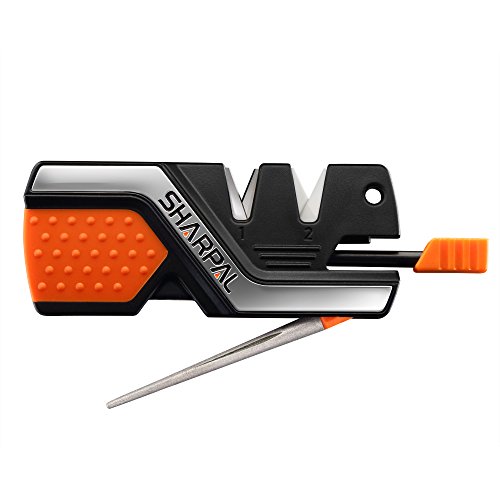
Overview: This compact, six-function tool packs a coarse CARBIDE V-slot for quick edge setting, a fine CERAMIC slot for honing, and a tapered diamond rod for serrations and gut hooks. It also includes a diamond rod with a groove for fishhooks, a ferro rod for fire-starting, and a high-pitched emergency whistle. The built-in lanyard hole makes it a dependable EDC field survival knife sharpener for hunting, camping, and general outdoor use. It also supports kitchen blades with its durable abrasives and preset sharpening angles.
Key features: The V-slot carbide provides rapid edge setting, while the ceramic slot finishes with a smooth edge. The diamond rod handles serrations and gut hooks, and the fishhook groove expands utility. The ferro rod adds basic fire-start capability, and the whistle offers emergency signaling. The device is designed to resist wear through repeated field use and retain a reliable sharpening angle across blades.
Ideal use cases: Hiking trips, camping, fishing excursions, and general outdoor operation where a reliable, all-in-one sharpener reduces gear needs. The tool’s compact size encourages carry-on convenience without sacrificing edge quality.
Work Sharp Guided Field Sharpener
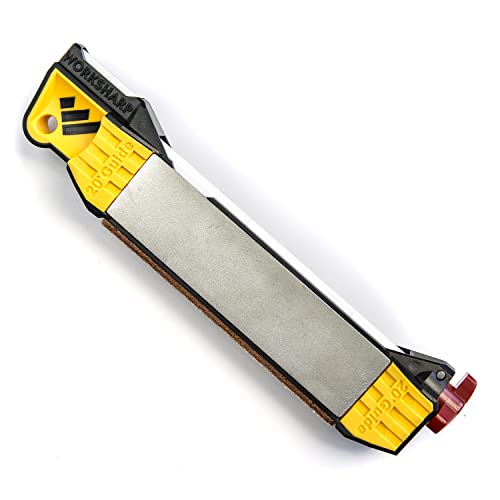
Overview: A complete, compact field sharpening solution designed for field, home, or shop use. The tool features removable diamond plates and a broad-head wrench to speed sharpening in the field. It includes diamond plates, ceramic rods, a leather strop, and sharpening guides. The ceramic honing rod can be rotated to expose coarse or fine surfaces and a grooved area for sharpening fish hooks. The setup aims for a consistent edge with minimal tool overhead.
Key features: Five abrasives provide a range of sharpening options, with an angle guidance system to maintain a consistent 20–25-degree edge. The device is self-contained and requires no extra tools, making it a practical choice for outdoor enthusiasts who need reliable sharpening on the move. Its durable construction supports rugged field use.
Ideal use cases: Backcountry trips, boating, camping, or any scenario where a compact, all-in-one sharpener must perform across blade types while carrying minimal gear weight.
SHARPAL 101N-G Kitchen Pocket Sharpener

Overview: This kitchen-friendly version of the SHARPAL 101N family adds rugged outdoor utility for straight and serrated blades. It replicates the six-function design with a coarse carbide slot for quick edge setting, a fine ceramic slot for finishing, a tapered 400-grit diamond rod for serrations and gut hooks, a diamond rod with a fishhook groove, a ferro rod for emergencies, and a whistle. It is a compact, durable solution for everyday carry and outdoor use.
Key features: Carried in a pocket or pack, it provides a reliable edge for kitchen knives and outdoor blades alike. Its carbides and ceramics offer both speed and precision, while the emergency whistle and ferro rod add basic survival capabilities. The tool’s design emphasizes long-lasting materials and preset sharpening geometry for consistent results.
Ideal use cases: Everyday kitchen maintenance, camping trips, hunting, and outdoor activities where a compact, multi-use sharpener improves blade readiness without adding bulk.
Smith’s PP1 Pocket Pal Knife Sharpener

Overview: Smith’s Pocket Pal combines a fold-out diamond-coated rod with preset crossed blades for straightforward pull-through sharpening. The two-stage system uses a coarse carbide slot for quick edge restoration and a fine ceramic stone for polishing. The diamond rod handles serrations, small gut hooks, and fish hooks, making it a versatile tool for fishing, camping, and hiking.
Key features: The compact design emphasizes portability, while the layered sharpening approach supports both rough edge setting and refined finishing. The diamond rod fold-out provides a dedicated path for serrations and hooks, complementing the carbide and ceramic stages for a complete sharpening workflow.
Ideal use cases: Fishing trips, camping weekends, and any scenario requiring a small, dependable sharpening kit that covers multiple blade configurations in a lightweight package.
Work Sharp Portable Pivot Knife Sharpener

Overview: The Pivot Sharpener emphasizes controlled sharpening along the blade’s curvature. Its convex-carbide surface quickly creates a durable edge on various knives, while a ceramic hone helps restore and maintain sharpness with a few passes. The pivot-action design guides edge geometry along the entire blade, supporting consistent performance for field tasks and daily use alike.
Key features: The convex carbide edge provides rapid cutting capability, and the ceramic honing surface ensures quick re-sharpening. The pivot mechanism helps maintain a steady angle, which can translate to reliable results across diverse blade shapes. The unit is designed for portability, making it a useful travel companion.
Ideal use cases: Outdoor adventures, everyday carry, and situations requiring reliable sharpening without a fixed-angle or guided system. Its compact form fits easily in packs, toolboxes, or belt pouches.
Buying Guide
What to consider when choosing a camping knife sharpener:
- Edge types: If you need to sharpen serrations, gut hooks, or fish hooks, look for a diamond rod or a dedicated serration-friendly slot.
- Setup and weight: Field use benefits from compact, self-contained units with simple operation and minimal tools.
- Required maintenance: Some sharpeners include leather strops or removable plates; consider how you’ll maintain the system over time.
- Edge consistency: Guided angle systems or preset angles help maintain a repeatable edge, especially for beginners or scouts in the field.
- Durability and materials: Carbide edges resist wear but may remove metal quickly; ceramic provides a fine finish—balance by blade type and use case.
- Portability: For camping and hiking, prioritize multi-tool functionality and a compact footprint over heavy, single-purpose devices.
- Extra features: Fire starters, whistles, and fish-hook sharpening can add value for survival scenarios but should not complicate sharpening basics.
Comparison snapshot:
- All-in-one pocket models (SHARPAL 101N, 101N-G, Smith’s PP1) balance portability with multi-stage sharpening and serration handling.
- Guided field sharpeners (Work Sharp Guided Field Sharpener, Elite versions) emphasize consistent results with angle guides and modular components.
- Portable pivot systems (Work Sharp Portable Pivot) target edge maintenance along curved blades with a simple pivot action.
Consider your typical blades, outdoor activities, and how much gear you’re willing to carry. A compact, multi-stage sharpener with a robust carbide and ceramic mix is usually a safe default. If you frequently deal with serrations or gut hooks, prioritize models offering dedicated serration sharpening options and extra features for field readiness.