Choosing a belay device for lead climbing involves balancing brake efficiency, rope compatibility, and ease of use. This guide highlights five trusted options optimized for lead climbing, including cam-assisted and assisted-braking models. Each product section provides key features, rope handling details, and what to consider when selecting the right device for sport, trad, or multi-pitch routes.
Quick comparison — Selected products and brands:
| Product | Brand | Type | Notable Feature |
|---|---|---|---|
| Petzl GRIGRI | PETZL | Cam-assisted belay device | Cam-assisted blocking for smooth lowering |
| NEOX Belay Device | PETZL | Cam-assisted blocking | Three-to-one descent control |
| ATC-XP | BLACK DIAMOND | Tube-style with friction modes | Multi-mode friction for versatile control |
| ATC Pilot | BLACK DIAMOND | Assisted-braking | Enhanced braking security |
| Mammut Smart 2.0 | Mammut | Tube-style | Low weight, simple operation |
Petzl GRIGRI Belay Device

The GRIGRI combines cam-assisted blocking with easy handling for both sport and trad climbs. Its 3:1 mechanical advantage during descent provides smoother lowering across a wide range of rope diameters, reducing effort for the belayer. The cam-assisted blocking system grips the rope more reliably as weight is applied, improving security in lead scenarios. Designed for comfort, this device includes installation diagrams engraved inside and outside to help belayers of all experience levels correctly thread and operate the rope. Ideal for climbers seeking a trusted, user-friendly belay option.
Key considerations:
– Best for lead and top-rope belays with a focus on controlled descent.
– Suitable for varied rope diameters due to its cam mechanism.
– Clear rope-routing guidance supports novice use and quick adaptation in the field.
NEOX Belay Device with Cam-Assisted Blocking
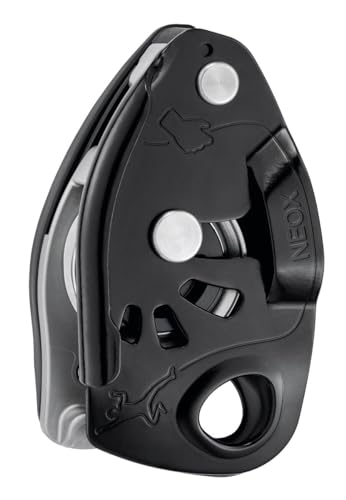
The NEOX is optimized for lead climbing, featuring a stainless-steel wheel that spins freely when giving slack and actively blocks the rope once weighted. The design reduces brake-hand fatigue by providing mechanical assistance during falls and enabling a controlled catch. A 3:1 descent control, with an ergonomic handle, ensures smooth lowering for both belayer and climber. This device emphasizes reliable rope-blocking and efficient slack management, making it a strong choice for sport routes and multi-pitch climbs where control matters most.
Key considerations:
– Cam-assisted blocking improves security during catches.
– The rope-blocking mechanism works across a variety of braking angles.
– Ergonomic design supports comfortable long belays and lowers.
Petzl NEOX Belay Device

Petzl’s NEOX emphasizes controlled slack and secure rope blocking. With its cam-assisted blocking and internal cam mechanism, the device clamps down to arrest rope when the line is weighted, helping to reduce the force needed by the belayer during falls. The 3:1 mechanical advantage enables progressive lowering, delivering smoother descents and increased confidence for both climbers and belayers on lead climbs. The NEOX’s design targets comfort and reliability during long belays on technical routes.
Key considerations:
– Excellent for long belays and lead transitions.
– Reliable rope arrest regardless of brake angle.
– Ergonomic handling for easier lowering and rope management.
Black Diamond ATC-XP Belay Rappel Device

The ATC-XP is a versatile, durable belay and rappel device with multiple friction modes. It supports sport, trad, and multi-pitch climbs, giving climbers the choice between high-friction and low-friction settings to tailor rope handling to conditions. Its hot-forged aluminum body balances strength and lightness, ensuring durability for frequent use in the field. This model remains a staple for climbers who want a simple, reliable belay tool with flexible friction control.
Key considerations:
– Suited for varied rope diameters and conditions.
– Easy to switch between friction modes for different climbs.
– Durable construction supports demanding use on long routes.
Black Diamond ATC Pilot Belay Device

The ATC Pilot provides assisted braking for added security during catches, producing a more controlled belay versus standard tube models. It is designed for smooth rope handling, allowing climbers to feed or take in slack predictably while belaying a leader. The device emphasizes ergonomic handling, including a large thumb surface that supports precise lowering, making it a practical option for new climbers and experienced belayers alike on gym and outdoor routes.
Key considerations:
– Enhanced braking stability during leader catches.
– Predictable rope management for rapid slack adjustments.
– Intuitive handling that lowers the learning curve for beginners.
Mammut Smart 2.0 Belay Device

The Smart 2.0 uses a tube principle without moving parts, promoting a lightweight and straightforward belay experience for lead and top-rope climbing. It blocks the rope in the event of a fall and incorporates a high-performance brake insert to enhance safety. This device is appreciated for its simplicity, reliable performance, and suitability for climbers who favor a minimalist, low-maintenance approach to belaying on diverse routes.
Key considerations:
– Great for climbers who prefer a simple tube-style design.
– Effective rope arrest during falls with minimal moving parts.
– Lightweight and easy to carry on longer trips.
Buying Guide: Key Purchase Considerations
- Belay mechanism type: Cam-assisted blocking (GRIGRI, NEOX) tends to provide additional hold during catches, while tube-style devices (ATC-XP, Smart 2.0) favor simplicity and weight savings.
- Descent control: Devices with 3:1 mechanical advantage offer smoother lowering, reducing fatigue on long descents.
- Rope compatibility: Check rope diameter ranges and whether the device accommodates both sport and trad rope profiles.
- Durability and weight: Aluminum bodies balance strength and weight; hot-forged designs tend to endure repeated use in harsh climbing environments.
- Ease of use: For beginners, devices with clear diagrams and intuitive handling can shorten the learning curve and improve safety on real routes.
- Maintenance: Consider devices with fewer moving parts for lower maintenance, or models with straightforward servicing if a breakdown occurs in the field.
- Ambitions and routes: For multi-pitch and alpine expeditions, prioritize reliable stopping power and smooth rope handling; for gym setups, a simpler device with assisted braking can suffice.
In choosing the best belay device for lead climbing, climbers should assess their typical routes, rope types, and comfort with assisted-braking systems. The options above cover cam-assisted blocking, assisted braking, and classic tube-style devices, offering a spectrum of control, safety, and handling characteristics for American climbers pursuing lead climbing on sport, trad, or multi-pitch routes.