Auto-trap throwers deliver consistent, hands-free launches to maximize training time and improve shooting accuracy. This guide highlights five top options that balance capacity, range, and portability for American shooting enthusiasts. Each entry includes key features to help you compare performance, durability, and setup ease for individual practice or team drills.
Summary Table of Selected Products
| Product | Brand | Key Benefit | Launch Range | Capacity |
|---|---|---|---|---|
| VEVOR Clay Pigeon Thrower, 50 Clays | VEVOR | High-capacity, long-range launches | 55+ yards | 50 clays |
| VEVOR Clay Pigeon Thrower, 28 Clays | VEVOR | Compact, versatile practice | 45+ yards | 28 clays |
| Do-All FF550 Firefly Automatic Skeet Thrower | Do-All Outdoors | Lightweight, portable, quick cycles | Typically 45+ yards | 25 clay feeder |
| Champion WheelyBird 3.0 Auto-Feed | Champion | High capacity and fast cycle with easy transport | Up to 70 yards | 60 clay stack |
| Do All Outdoors Wheelhouse Automatic Thrower | Do All Outdoors | Balanced power and range with remote options | 55+ yards | 50 targets |
VEVOR 50-Clay Auto Thrower

The VEVOR 50-clay automatic launcher supports hands-free operation via a long foot-pedal cord, enabling launches every two seconds. It requires a 12V deep-cycle battery (not included). With a large hopper that holds up to 50 targets, this model is designed for continuous practice sessions, team drills, or multi-user setups. The adjustable angle allows distance control, delivering targets past 55 yards for long-range training. Ideal for skeet and trap scenarios, it combines reliability with straightforward operation.
VEVOR 28-Clay Auto Thrower
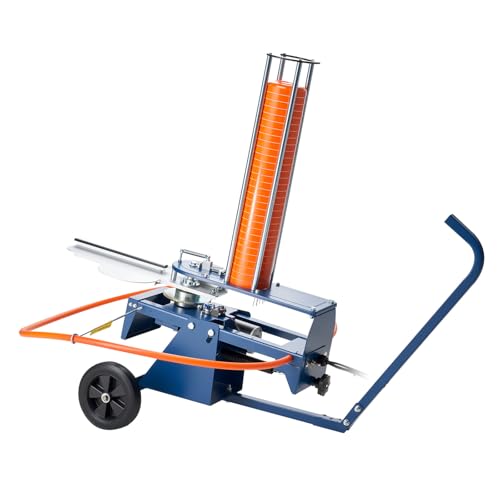
This compact VEVOR model handles up to 28 clay targets and offers a 9.84-foot extended foot-pedal cord for hands-free operation. Like its larger sibling, it requires a 12V battery and can launch targets over 45 yards with an adjustable angle. The design emphasizes efficient training by reducing reload downtime, making it well-suited to shooting classes, team practice, and multi-user sessions where space is limited.
Do-All FF550 Firefly Automatic Skeet Thrower
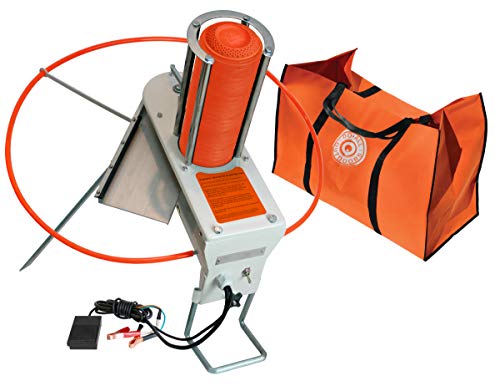
Weighing about 27 pounds, the FireFly is a lightweight option designed for portability. It feeds 25 clay targets and features a 2.5-second recycle time with a 10-foot pedal release cord. Built with professional-grade materials, including an aircraft aluminum arm, the FF550 supports quick, repeated launches ideal for fast-paced drills and clinics. It suits shooters who need a balance between ease of transport and reliable performance.
Champion WheelyBird 3.0 Auto-Feed Trap

The WheelyBird 3.0 increases capacity with a 60-clay stack and offers a rapid throw cycle, enabling dynamic practice sessions. It delivers distances up to 70 yards in certain configurations and includes features like battery cart storage and ultra-wide tires for easy transport. A wireless remote option is compatible with this model, making it a strong choice for both solo practice and group clinics that require quick target transitions.
Do All Outdoors Wheelhouse Automatic Thrower

The Wheelhouse model combines robust construction with broad range, throwing targets 55+ yards in a single plane. It holds up to 50 clay targets and includes a pull handle for easier maneuvering. Weighing a sturdy value-for-performance ratio, this unit is suitable for serious practice sessions, teams, and clubs that need steady, long-range launches with simple operation.
Buying Guide: Key Purchase Considerations
- Capacity vs. space: Higher-capacity units (50+ targets) reduce reloads but require more space and heavier setup. Smaller models (28 clays) save space and are easier to transport.
- Range and distance control: Look for adjustable launch angles or distance dials to tailor targets to your skill level and training needs. Long-range options (45–70 yards) are ideal for challenging drills.
- Power requirements: Most units use a 12V deep-cycle battery. Verify battery availability, weight, and charging requirements, and check if a compatible battery is included or sold separately.
- Portability and setup: For clubs or clinics, portability features (wheels, handles, quick-release components) save time between sessions. Weigh the unit if frequent transport is planned.
- Build quality and durability: Aluminum and steel components typically offer longevity under routine outdoor use. Consider weather-resistant features if outdoor practice is common.
- Controls and feedback: Pedal-activated or remote-controlled options influence training flow. Foot pedal length and release timing affect immediate practice cadence.
- Compatibility: Ensure the unit supports the clay sizes you use (commonly 108mm or 110mm standard pigeons) and the type of clays for skeet or trap formats.
- Maintenance: Look for straightforward cleaning access and parts availability for replacement components like arms, motors, or jumpers.
- Budget vs. value: Compare initial cost with ongoing training benefits. A mid-range model with higher reliability and serviceability can offer better long-term value than a cheaper, less durable option.
In selecting an automatic thrower, match the device to your shooting frequency, available practice space, and target distance goals. For clubs and teams, models with higher capacity and faster cycling support larger groups. For solo practice, portability and ease of use may take precedence. Always confirm battery specifications and digital or mechanical controls to ensure a smooth training experience.