For stargazers and wildlife enthusiasts seeking ultra-bright, distant views, 25×100 astronomy binoculars offer giant aperture performance with impressive detail. This guide highlights five strong options, emphasizing tripod compatibility, optical coatings, and ease of use. Each product below includes key features to help you compare quality, brightness, and handling for hands-free long viewing sessions.
| Product | Magnification / Objective | Notable Feature |
|---|---|---|
| Celestron SkyMaster 25×100 Binoculars | 25x, 100mm | Largest tripod-mounted option with ¼”-20 adapter |
| Zhumell 25×100 Tachyon Binoculars | 25x, 100mm | Fully multi-coated lenses, BaK-4 prisms |
| Celestron SkyMaster 25×70 Binoculars | 25x, 70mm | Balanced long-distance viewing with tripod adapter |
| 20×80 Astronomy Binoculars (Sogries) | 20x, 80mm | BaK-4 prisms, lightweight tripod compatibility |
| Celestron SkyMaster Pro 20×80 Binocular | 20x, 80mm | XLT coatings, tripod-ready design |
Note: All products listed are tripod-oriented designs that maximize light gathering. Where relevant, each entry notes tripod compatibility and coating types to help you choose based on brightness, sharpness, and stability in low-light conditions.
Celestron SkyMaster 25×100 Binoculars

These are the largest tripod-mounted binoculars in the SkyMaster line, featuring 100mm objective lenses and 25x magnification. They’re designed for deep-sky astronomy and long-distance terrestrial viewing when paired with a sturdy tripod. A built-in ¼”-20 adapter makes tripod attachment quick and straightforward. BaK-4 prisms deliver brighter, sharper images, especially in dim conditions around dawn, dusk, or night skies. Handling is best with a stable mount due to their size and weight.
Zhumell 25×100 Tachyon Astronomy Binoculars
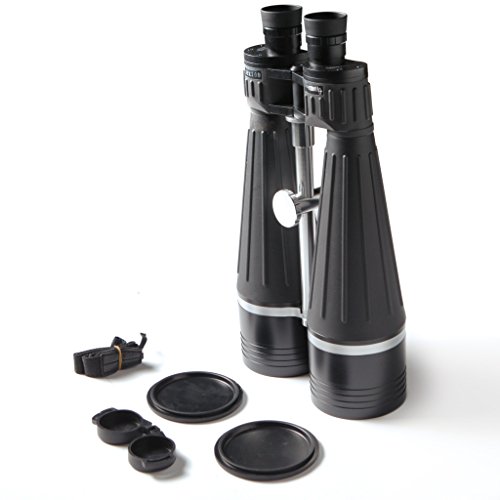
With giant 100mm objective lenses, these binoculars are optimized for deep-space viewing. They feature fully multi-coated lenses and BaK-4 prisms to maximize light transmission for bright, detailed images. The black finish and solid construction support stable handheld or mounted use, though tripod support is highly recommended for best results at high magnifications.
Celestron SkyMaster 25×70 Binoculars

This model offers powerful 25x magnification with 70mm objectives, providing bright, long-distance viewing suitable for astronomy and terrestrial observations. It includes a tripod adapter for stable use and uses BaK-4 prisms to improve light transmission and image clarity in dim lighting conditions.
20×80 Astronomy Binoculars (Sogries)

Although slightly lower in magnification, these 20×80 binoculars deliver bright, detailed views with BaK-4 prisms and FMC multi-coated optics. They are designed for easy tripod attachment and comfortable long viewing sessions, making them a versatile choice for both stargazing and wildlife observation in low light.
Celestron SkyMaster Pro 20×80 Binocular

The SkyMaster Pro 20×80 combines high-grade optics with robust construction. Fully multi-coated optics and BaK-4 prisms boost light transmission and color fidelity, while a dedicated tripod-ready design simplifies long-range viewing. A detachable reflex sight rail offers flexibility for advanced targeting and convenience in both astronomy and outdoor use.
Buying Guide
Key purchase considerations ensure you select binoculars that fit your needs and budget. Consider aperture size, magnification, and stability, especially for prolonged observing sessions.
- Tripod compatibility: At 25x magnification, a stable tripod dramatically reduces shake and improves image clarity. Look for ¼”-20 threaded adapters and sturdy mounting options.
- Optical coatings: Fully multi-coated optics and BaK-4 prisms maximize light transmission and contrast, especially in low-light conditions near dawn or dusk.
- Aperture and balance: Larger objectives (70–100mm) gather more light but add weight. Ensure comfort with tripod use or a balanced carrying solution.
- Field of view: Narrow fields are common at high magnifications. Check if the model offers a wide enough view to locate objects quickly before tracking them.
- Durability and weather resistance: Look for models with quality build and protective coatings, particularly if you’ll use them in outdoor environments.
- Ergonomics and eye relief: For extended sessions, consider eye relief and comfort features. Weight distribution matters for long-term use on a mount.
Price, weight, and portability are also important. If you plan frequent transport or field use, weigh the trade-offs between maximum light gathering versus handling ease. For deep-sky observing, brighter images and stable mounting tend to yield the best results, while for terrestrial long-distance viewing, comfortable balance and easy setup matter more.